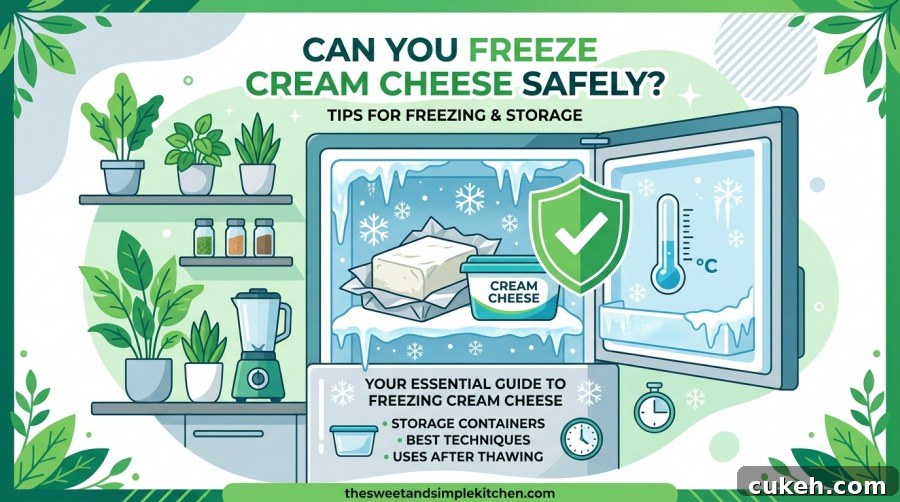
Yes—you can safely freeze cream cheese. If you’ve ever hesitated before tossing a block of cream cheese into the freezer because its sell-by date is approaching, the short answer is: go ahead. Freezing cream cheese can extend its usable life up to about two months without posing food-safety risks. Be prepared, however, for a change in texture after thawing. Thawed cream cheese often becomes slightly grainy or crumbly, but with a few simple techniques you can recover much of its creaminess, and it remains ideal for many cooked and baked recipes. This article explains how freezing affects cream cheese, step-by-step freezing and thawing methods, and the best ways to use thawed cream cheese in the kitchen.
Table of Contents
Key Takeaways
- Freezing cream cheese is safe and can extend its usable life up to two months.
- Expect a texture change—thawed cream cheese often becomes grainy or slightly crumbly.
- Best uses include baking, casseroles, dips, sauces, and other cooked applications.
- Not ideal for spreading cold—avoid using thawed cream cheese as a bagel spread when smoothness matters.
- Texture can be improved with a stand mixer, hand mixer, whisk, or brief gentle warming.
- “Do not freeze” labels are quality warnings, not safety alerts.
Quick Comparison: Freezing Different Types of Cream Cheese
Different styles of cream cheese react differently to freezing. Block-style cream cheese (unopened) generally fares best, opened blocks are usable if wrapped well, whipped varieties separate and become watery, and cream cheese frostings can be re-whipped after thawing.
| Type | Freezer Life | Texture After Thawing | Best Use After Freezing |
|---|---|---|---|
| Unopened block | Up to 2 months | Grainy, crumbly | Baking, cooking, dips |
| Opened block | Up to 2 months | Grainy, slightly more crumbly | Cooked dishes, casseroles |
| Whipped cream cheese | Up to 1 month (not recommended) | Separates, watery | Only mixed into batters |
| Cream cheese frosting | Up to 3 months | Needs re-whipping | Re-whipped for cakes |
What Happens When You Freeze Cream Cheese (The Dairy Science)
Cream cheese is an emulsion of water droplets suspended in a fat matrix stabilized by milk proteins. Freezing turns the water into ice crystals that puncture and damage the protein network. After thawing, the weakened structure allows water to separate from fat, producing a grainy or slightly watery texture. The good news is that flavor remains intact—only the physical texture is altered.
Why Does Cream Cheese Say “Do Not Freeze”?
Packaging that warns “do not freeze” is focused on preserving quality rather than addressing safety. Manufacturers include this to prevent consumers from blaming them for a less-than-creamy texture after freezing. From a food-safety perspective, freezing cream cheese is safe; it simply changes the mouthfeel.
How to Freeze Cream Cheese: Step-by-Step Instructions
Follow different steps depending on whether the block is unopened or already opened.
Freezing an Unopened Block of Cream Cheese
- Check the expiration date and freeze while the product is still fresh.
- Wrap the unopened foil-wrapped block in plastic wrap or aluminum foil to prevent freezer burn.
- Place the wrapped block in a resealable freezer bag, remove excess air, seal, label, and date.
- Freeze the block flat so it freezes and thaws evenly.
Freezing an Opened or Partially Used Block
- Transfer remaining cream cheese to a clean, airtight container, pressing plastic wrap directly against the surface before sealing if desired.
- Or rewrap the block tightly in two layers of plastic wrap to eliminate exposed surfaces.
- Place in a freezer bag, remove air, label, and freeze flat. Use within two months for best quality.
Freezing Whipped Cream Cheese
Whipped cream cheese is not recommended for freezing. The air incorporated during whipping collapses and the product separates. If you must freeze it, store in an airtight container and plan to use it only in cooked or mixed applications where texture won’t be noticed.
Freezing Cream Cheese in Portions
- Half-cup portions: use small resealable bags or silicone molds and flatten for quick thawing.
- Tablespoon scoops: freeze on a parchment-lined tray, then transfer frozen scoops to a bag for quick additions to sauces or eggs.
- Recipe-specific amounts: portion the exact amount your recipe needs and label accordingly for easy meal prep.
How Long Can You Freeze Cream Cheese Safely
For best quality, use frozen cream cheese within about two months. It remains safe beyond that, but prolonged freezing increases the risk of freezer burn and degraded texture. Store at 0°F (-18°C) or below and avoid spots near the freezer door where temperatures fluctuate.
How to Thaw Frozen Cream Cheese
Choose a thawing method based on time and the level of texture preservation you need.
Method 1: Refrigerator Thawing (Best)
Thaw the cream cheese in the refrigerator overnight (8–12 hours for an 8-ounce block). Slow, even thawing minimizes additional texture damage and keeps the product safely cold during the process.
Method 2: Cold Water Bath (Faster)
For faster thawing, keep the cream cheese sealed and submerge the bag in cold water, changing the water every 30 minutes. An 8-ounce block typically thaws in 2–3 hours. Do not use warm water.
Method 3: Microwave (Last Resort)
Use the microwave carefully on defrost or low power in short bursts (15 seconds), stirring between intervals. Stop when the center is soft but still cool. This method risks uneven heating and additional texture issues.
How to Make Frozen Cream Cheese Creamy Again
There are reliable ways to improve the texture of thawed cream cheese:
Method 1: Stand Mixer or Hand Mixer (Most Effective)
Break the thawed cream cheese into chunks, beat on medium speed for 2–3 minutes, scraping down the bowl. Add 1 teaspoon of milk or cream per 8 ounces if it seems dry. This usually restores a smooth, spreadable consistency suitable for frostings and dips.
Method 2: Hand Whisking (Good for Small Amounts)
For small quantities, press the cream cheese through a fine-mesh strainer to break up large curds, then whisk vigorously for a couple of minutes.
Method 3: Brief Microwave Softening (Quick Fix)
Warm for 10–15 seconds on medium power, then stir vigorously. The brief warmth softens fats and helps reintegrate separated moisture—avoid overheating.
When to Accept the Grainy Texture
If a recipe will heat the cream cheese (baked cheesecake, casseroles, warm dips) or blend it thoroughly, minor graininess won’t matter. Save the extra effort for dishes where the smooth, chilled texture is essential.
Best Uses for Thawed Cream Cheese (And What to Avoid)
Thawed cream cheese performs best in cooked or mixed applications and is less suitable where the fresh, silky texture is the focus.
Best Uses (Texture Does Not Matter or Gets Fixed)
- Baked cheesecakes: Heat eliminates any residual graininess.
- Casseroles and hot dips: Thawed cream cheese blends smoothly when heated.
- Frostings: Reworked in a stand mixer, it makes a fine frosting base.
- Quick breads and baked goods: Melts into batters and bakes without issue.
- Hot sauces and soups: Incorporates evenly when stirred into warm liquids.
Uses to Avoid (Texture Is Front and Center)
- Bagel spread: Thawed cream cheese usually lacks the silky spread required for a great bagel experience.
- Sensitive no-bake desserts: Unbaked fillings that rely on a smooth texture may not turn out as intended.
- Cheese boards or presentations: Graininess and separation are noticeable on platters.
Signs Your Frozen Cream Cheese Has Gone Bad
Discard thawed cream cheese if you notice any of the following:
- Mold growth: Any fuzzy or colored spots—green, blue, pink, or white—mean toss it.
- Off smells: A sharp sour or rancid odor indicates spoilage or fat oxidation.
- Discoloration: Widespread yellowing or browning beyond minor freezer burn is a red flag.
- Excessive liquid separation: A large pool of cloudy liquid with little solid left suggests breakdown.
- Extensive ice crystals: If the block is full of ice crystals, quality is likely too degraded to use.
- When in doubt, discard: It’s better to be safe than risk an off-flavored or unsafe product.
Final Thoughts on Freezing Cream Cheese
Freezing cream cheese is a practical and safe way to reduce waste and stretch supplies. While freezing changes texture, the flavor stays the same and most culinary uses—especially heated or mixed dishes—accept thawed cream cheese without issue. With simple wrapping and labeling, plus a quick remix after thawing when needed, frozen cream cheese makes a useful pantry item for bakers and home cooks alike.