⭐ Rating: 4.8/5 (based on 150+ home cooking experiences)
👨🍳 By Chef Omar Allibhoy
🕒 Prep Time: 12 hours (soaking)
🍳 Cook Time: 2.5 hours
⏰ Total Time: 14.5 hours
🥘 Servings: 6
📊 Difficulty Level: Medium
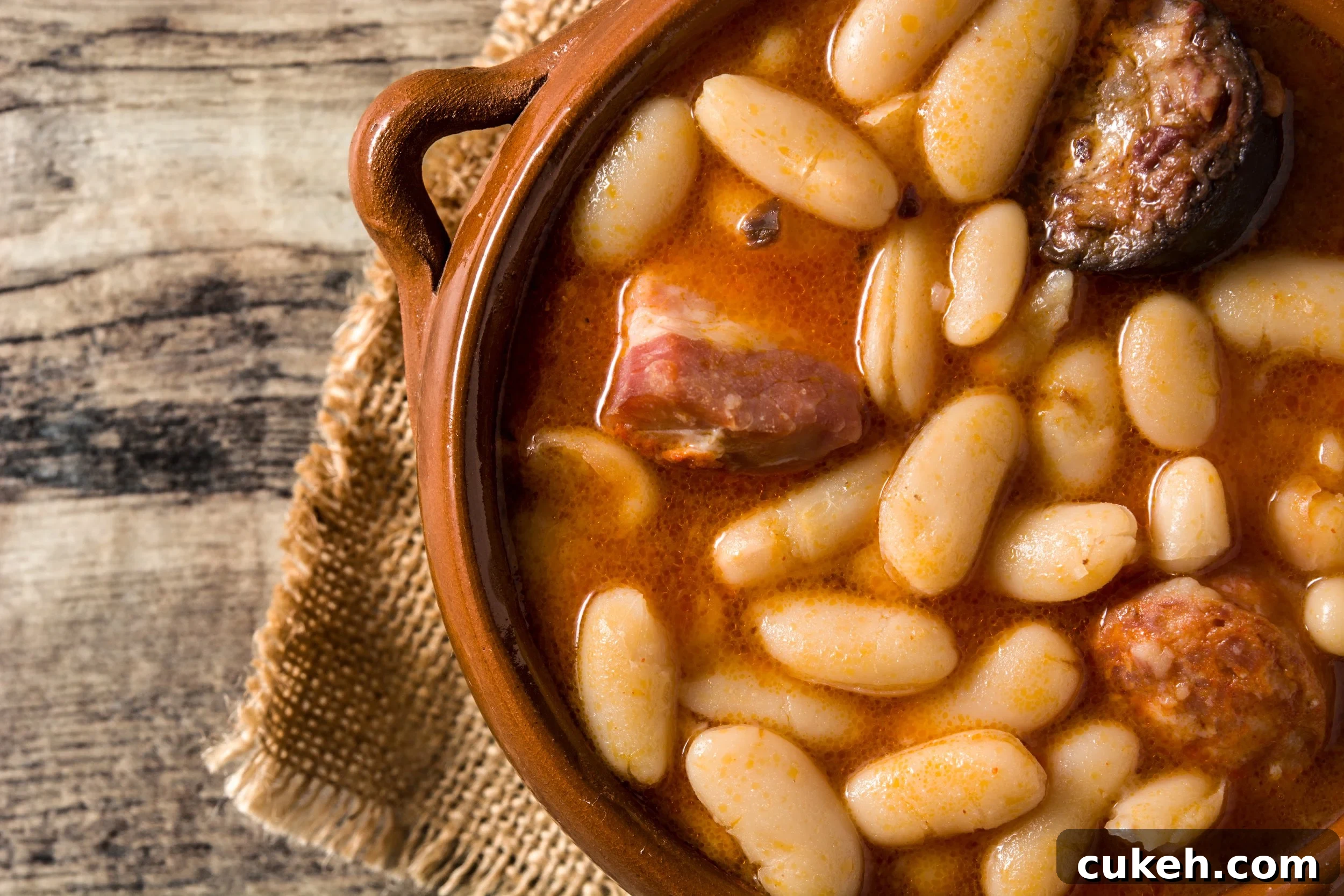
As a Spanish chef based in London, I love sharing one of our most comforting traditional dishes: Fabada Asturiana. This hearty bean stew from the mountains of Asturias is more than a meal — it’s a taste of home, a slow-cooked tradition that brings families and friends together. Simple ingredients transform into a rich, satisfying dish through patience and attention to technique.
On cold evenings this is the dish I return to again and again. Fabada is humble but generous: creamy white beans simmered with cured pork, chorizo, and morcilla to build deep, layered flavours. It showcases the Spanish approach to comfort food — unpretentious, rooted in quality ingredients, and best enjoyed shared at the table.
What is Fabada Asturiana?
Fabada Asturiana is a classic of northern Spanish cuisine. At its heart are large white beans called fabes, cooked slowly with a mix of cured meats like chorizo, pancetta or lacón, and morcilla (blood sausage). Though sometimes compared to cassoulet, Fabada has a unique profile defined by Spanish cured meats and saffron-infused broth.
Ingredients
-
500g dried fabes (large white beans)
-
200g morcilla (Spanish blood pudding)
-
200g chorizo (preferably cooking chorizo)
-
200g pancetta or lacón (cured pork shoulder)
-
2 cloves of garlic, whole
-
1 large onion, finely chopped
-
2 bay leaves
-
A pinch of saffron
-
Salt to taste
-
Extra virgin olive oil
Preparation
-
Soaking (12 hours before):
-
Cover the fabes with cold water and soak overnight.
-
Change the water at least once during soaking to remove impurities.
-
Initial Cooking (30 minutes):
-
Drain and rinse the soaked beans thoroughly.
-
Place beans in a large pot and cover with fresh cold water.
-
Bring to a gentle boil and skim off any foam that rises to the surface.
-
Main Cooking (about 2 hours):
-
Add the chorizo, morcilla, pancetta (or lacón), whole garlic, chopped onion, and bay leaves to the pot.
-
Reduce the heat and simmer gently. Keep the surface at a low, steady simmer — do not allow a vigorous boil, which can break the beans.
-
About 30 minutes before the end of cooking, add the saffron so it releases its aroma and colour.
-
Taste and add salt only when the beans are tender to avoid toughening their skins.
Professional tips for the perfect fabada
-
Patience is essential: slow, gentle simmering creates the best texture and flavour.
-
Avoid salting early; add salt at the end so the beans cook evenly and soften properly.
-
Choose the best-quality fabes you can find; they make a noticeable difference in creaminess.
-
Let the stew rest for 10–15 minutes before serving to allow the flavours to settle.
-
Fabada often tastes better the next day — if time allows, prepare it ahead to deepen the flavours.
This dish shines because it brings people together. Whether for a family dinner or a cosy gathering, Fabada Asturiana creates warming, memorable moments. In Spain we say, “La comida sabe mejor cuando se comparte” — food tastes better when shared.
The recipe is straightforward in concept even if it requires time: good ingredients, slow cooking, and a little care. The final result is a bowl that transports you to northern Spain, where rustic cuisine celebrates generous flavours and communal dining.
What to serve with your fabada
Fabada is a complete, filling meal, but these accompaniments work well:
-
Crusty Spanish bread to soak up the broth
-
A glass of Asturian cider or a robust red wine
-
A simple green salad dressed with a light vinaigrette
-
For dessert, a traditional Cantabrian cake such as sobao pasiego complements the meal nicely