
Starting baby-led weaning is a favorite topic here at Mama Knows Nutrition. Whether this is your baby’s first experience with solids or you’re returning to finger foods, this page will walk you through how to begin baby-led feeding. You don’t need jars of purees—whole foods prepared safely can be offered right away.
Baby-led weaning is an exciting, nutritious, and delightfully messy journey. It helps establish healthy eating habits by introducing babies to whole foods they can explore and self-feed.

If your baby is around six months old—the ideal age to begin solids—you’re likely building a list of safe, simple foods and breakfasts to offer. Breakfast can feel a bit harder to plan than lunch or dinner because typical “breakfast” foods are more limited, but there are many easy, nutritious options for baby-led eaters. Below are my top five breakfast ideas that are simple to prepare and baby-friendly.
My 5 Top Baby-Led Weaning Breakfast Ideas 6 Months
These ideas are intended to be practical and low-effort. If your household mornings are rushed (or you’re sleep-deprived like many parents of six-month-olds), these breakfasts focus on minimal cooking—often just some eggs—plus simple assembly.
Why Is Breakfast So Important For 6-Month-Old Babies

Breakfast matters because it follows the longest fasting period of the day: sleep. Babies often arrive at the high chair hungry in the morning, and many infants and toddlers naturally eat more earlier in the day. Offering a satisfying, well-rounded breakfast gives them the chance to meet those energy needs.
What Nutrients Should Be In Breakfast for 6-Month-Old BLW Babies
Aim for a balanced meal that includes:
- Carbohydrates (bread, oatmeal, fruit)
- Protein (eggs, dairy)
- Healthy fats (dairy, nut or seed butters)
- Fiber (whole grains, fruit)
- Vitamins and minerals from fruits and vegetables
You don’t need to cover every nutrient at every meal, but try to include at least one source of carbohydrate, protein, and fat. Offer a variety of foods across meals and include iron-rich options when possible.
What Can A 6 Month Old Eat For Breakfast
Babies can eat many of the same breakfasts adults enjoy—toast, oatmeal, egg dishes, and plain yogurt are all good choices. A few important considerations:
Keep sodium low.
Avoid adding salt to baby’s food; flavor can come from gentle spices and whole foods. Babies should have limited sodium until after their first birthday.
Skip added sugars.

Avoid maple syrup, sugary flavored yogurts, and sweetened breakfast products. Whole fruit and plain dairy are better choices.
Watch for choking hazards.
Offer foods that are soft and mashable between two fingers. Avoid hard, crunchy items like whole nuts or dense granola for young babies.
Eggs: Scrambled Eggs and Baby Omelettes
Scrambled eggs are an easy, nutrient-dense breakfast. Whisk eggs with a splash of whole milk and cook gently until fully set. Stirring in a spoonful of whole-milk ricotta or cottage cheese adds healthy fat and protein. Eggs provide high-quality protein, healthy fats, choline for brain development, iron, and B vitamins.

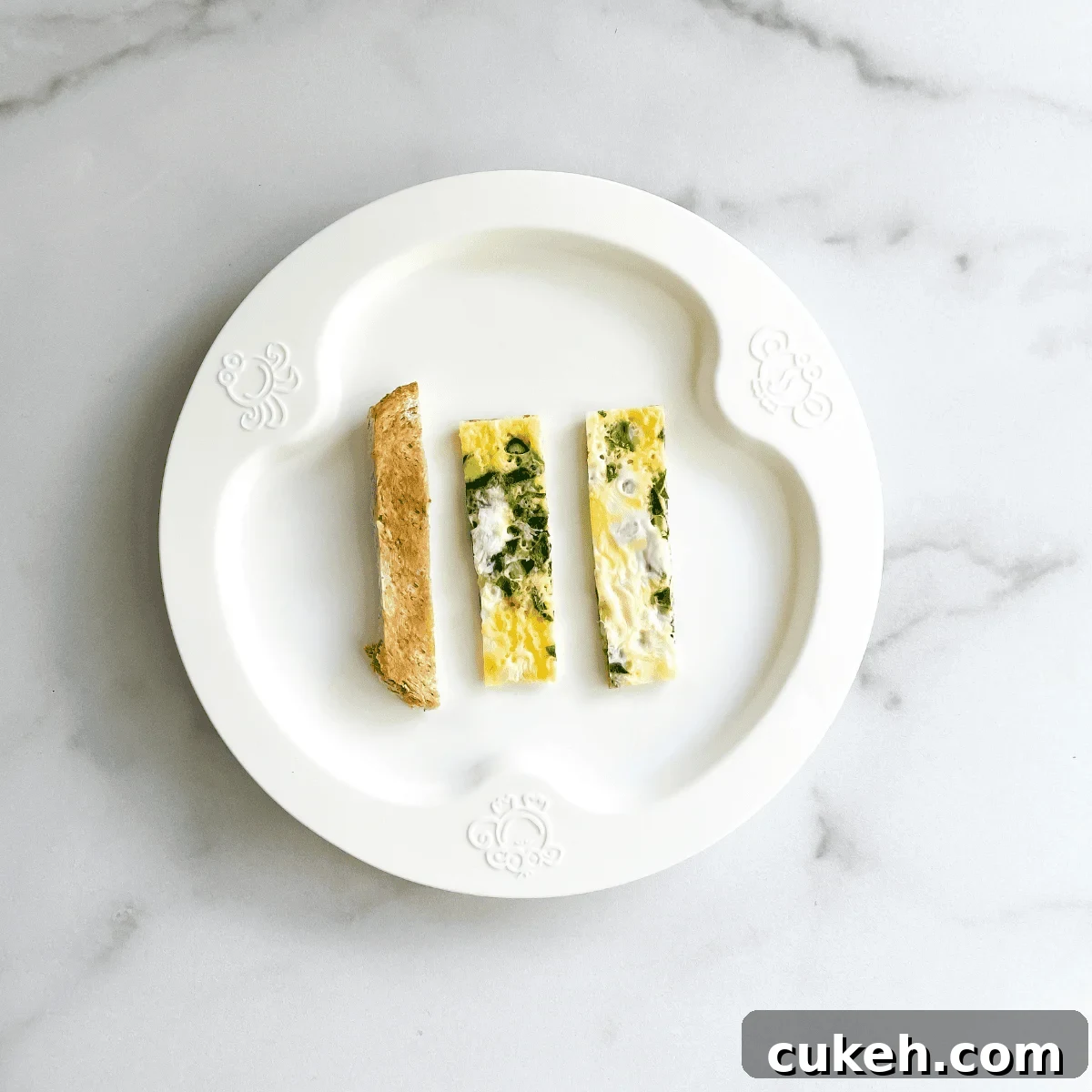
A baby omelette is an easy way to add vegetables—finely chopped spinach or small pieces of steamed broccoli folded into the eggs, cooked through, then cut into strips for baby to grasp.
Yogurt Parfait
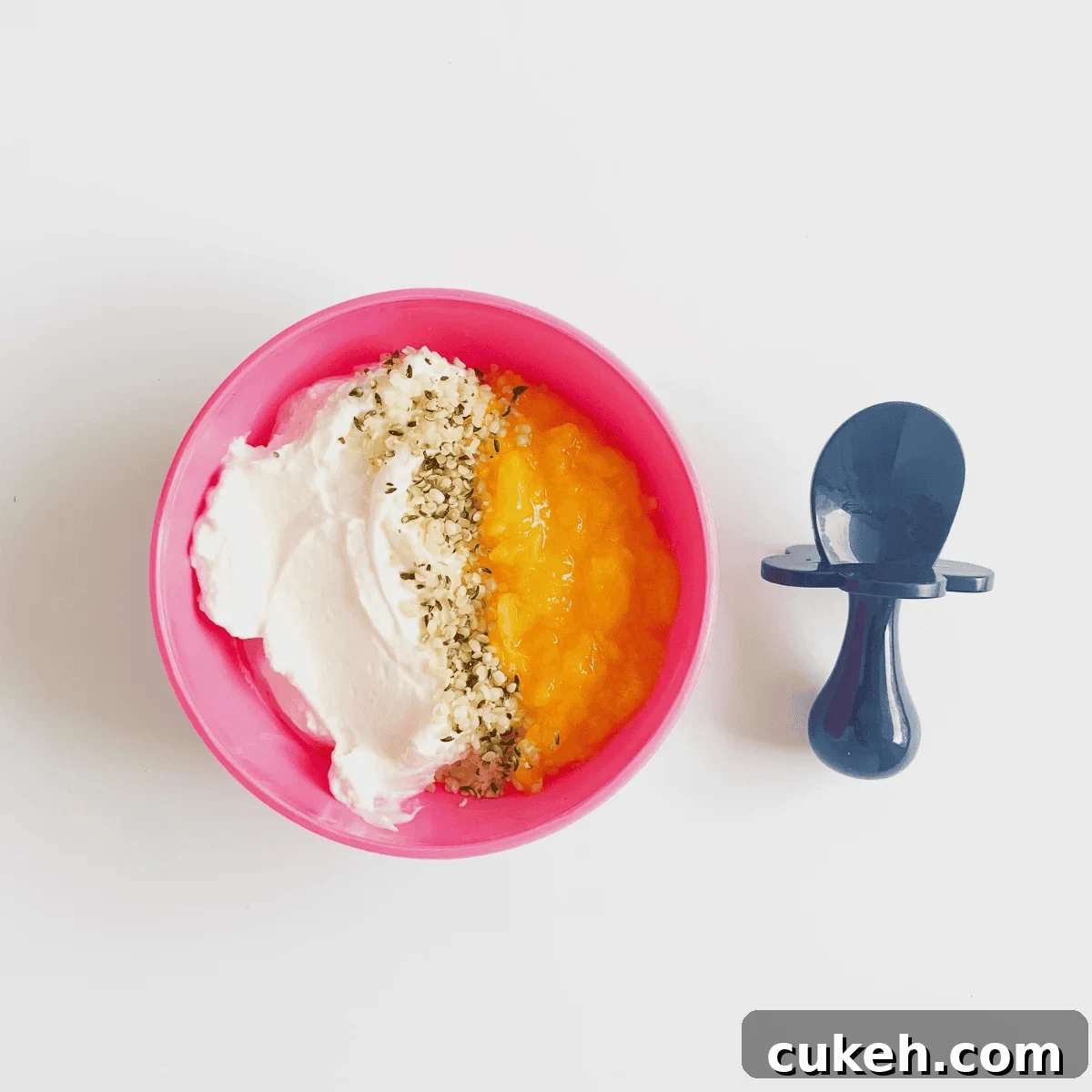
Start with plain, full-fat Greek yogurt (no added sugar). Add nutritious mix-ins like a teaspoon of nut or seed butter, mashed berries, and a sprinkle of chia, hemp, or ground flaxseed—these seeds can be offered safely without added choking risk when mixed in. This bowl delivers protein, healthy fat, and fiber.
Mix-in ideas:
- Mashed mango and hemp seeds
- Mashed blackberry and almond butter
- Unsweetened applesauce with cinnamon and ground flax
- Mashed strawberries with peanut butter and chia seeds
- A smooth fruit pouch stirred with almond butter
French Toast Sticks

French toast is another egg-forward option. Use whole-grain bread dipped in an egg mixture and cook until the coating is set. Make baked or stovetop versions, then cut into strips. Serve plain or with mashed berries and a dollop of plain yogurt—no syrup.
Oatmeal Bowl
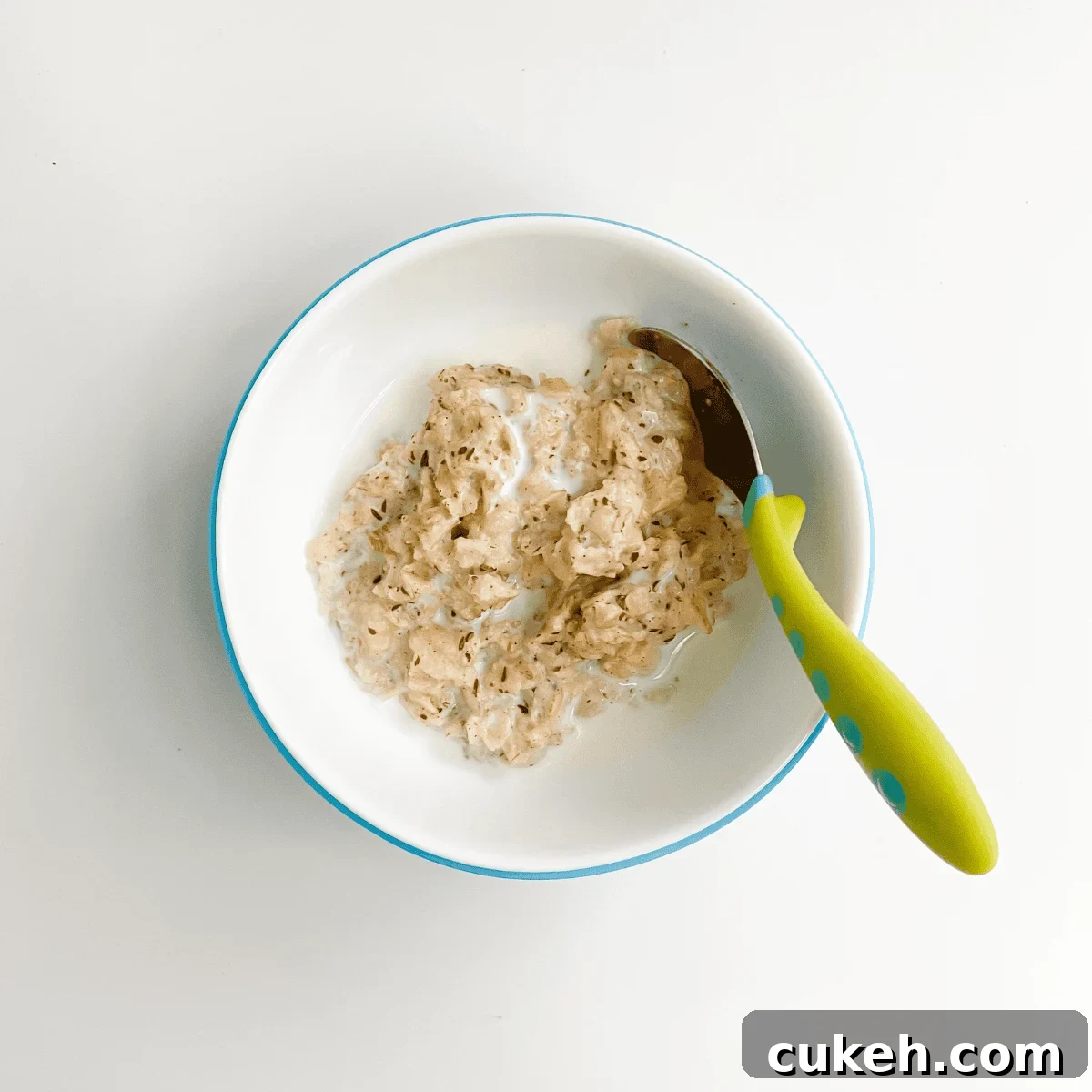
Oatmeal is versatile and filling. Cook oats in milk for extra protein and creaminess, and thin with milk or breast milk to a scoopable consistency. Top with mashed fruit, a teaspoon of nut butter, seeds, yogurt, or pumpkin/sweet potato puree. Oats provide complex carbohydrates and some protein, and pairing them with fat and protein makes them more satisfying.
If you need nut-free options, try these ideas:
- Stir in a teaspoon of ground flax, 1/4 mashed banana, and a pinch of cinnamon
- Top with a light drizzle of coconut butter
- Mix in a tablespoon of pumpkin puree, a sprinkle of pumpkin pie spice, and a little butter
Baby-Led Weaning Muffins
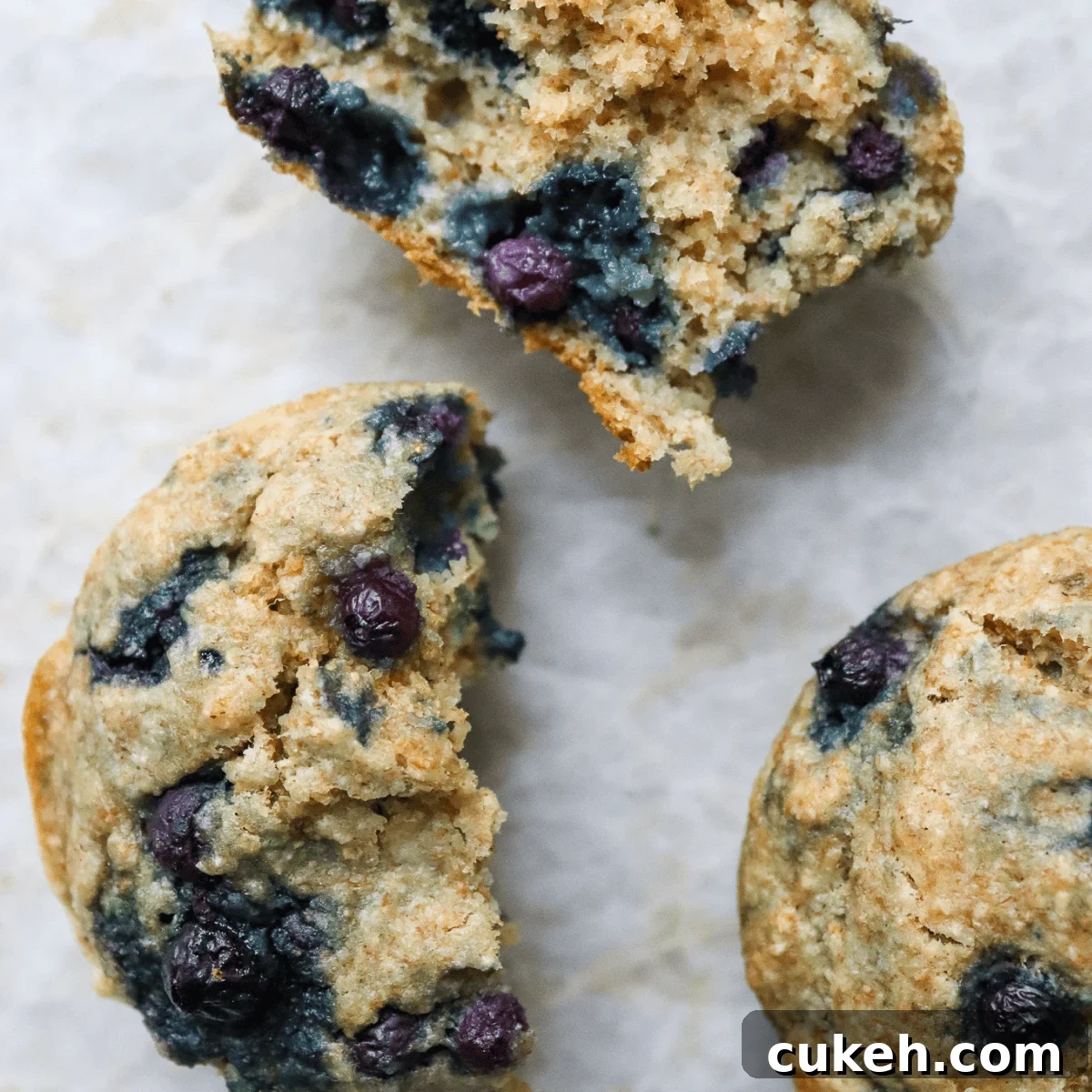
Soft, low-sugar muffins made with whole ingredients can be a convenient breakfast. Muffins made from banana and berries bake to a tender texture that’s easy for babies to gum and self-feed. Cool them to room temperature, split or cut into manageable pieces, and optionally spread a thin layer of nut or seed butter for extra nutrients.
More Baby-Led Weaning Breakfast Ideas 6 Months and Beyond
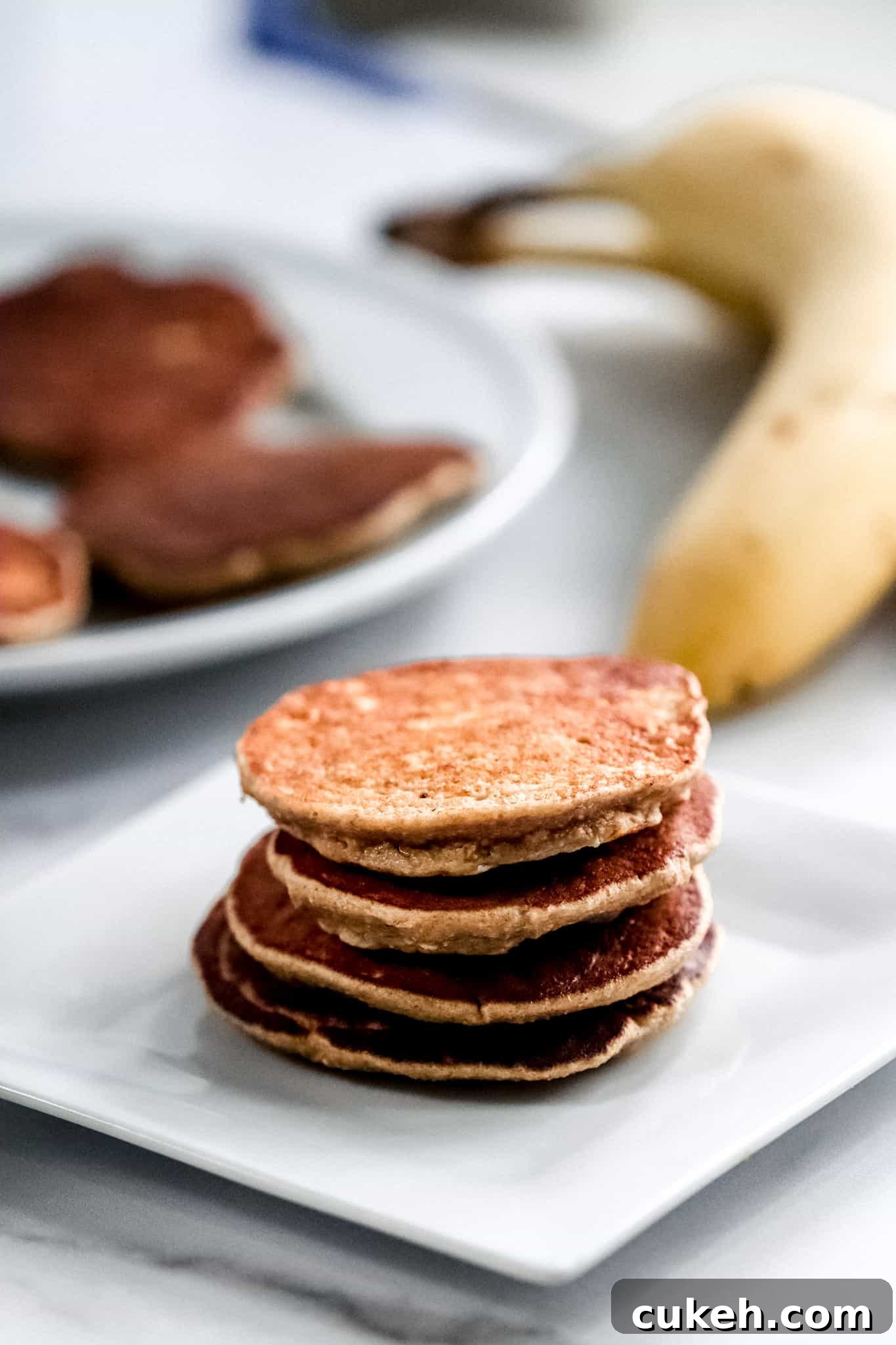
Other baby-friendly breakfasts to try include simple pancakes made with banana and oats, and no-sugar-added baked oatmeal bars. As your baby grows, continue offering a variety of textures and flavors so they learn to enjoy many foods.
Starting solids is a shared journey for you and your baby. Over time, you’ll find a rhythm of preparing and enjoying meals together. Introducing a range of nutritious, appropriately textured breakfast foods helps build a positive relationship with food that will last. You’re doing important work—keep going!