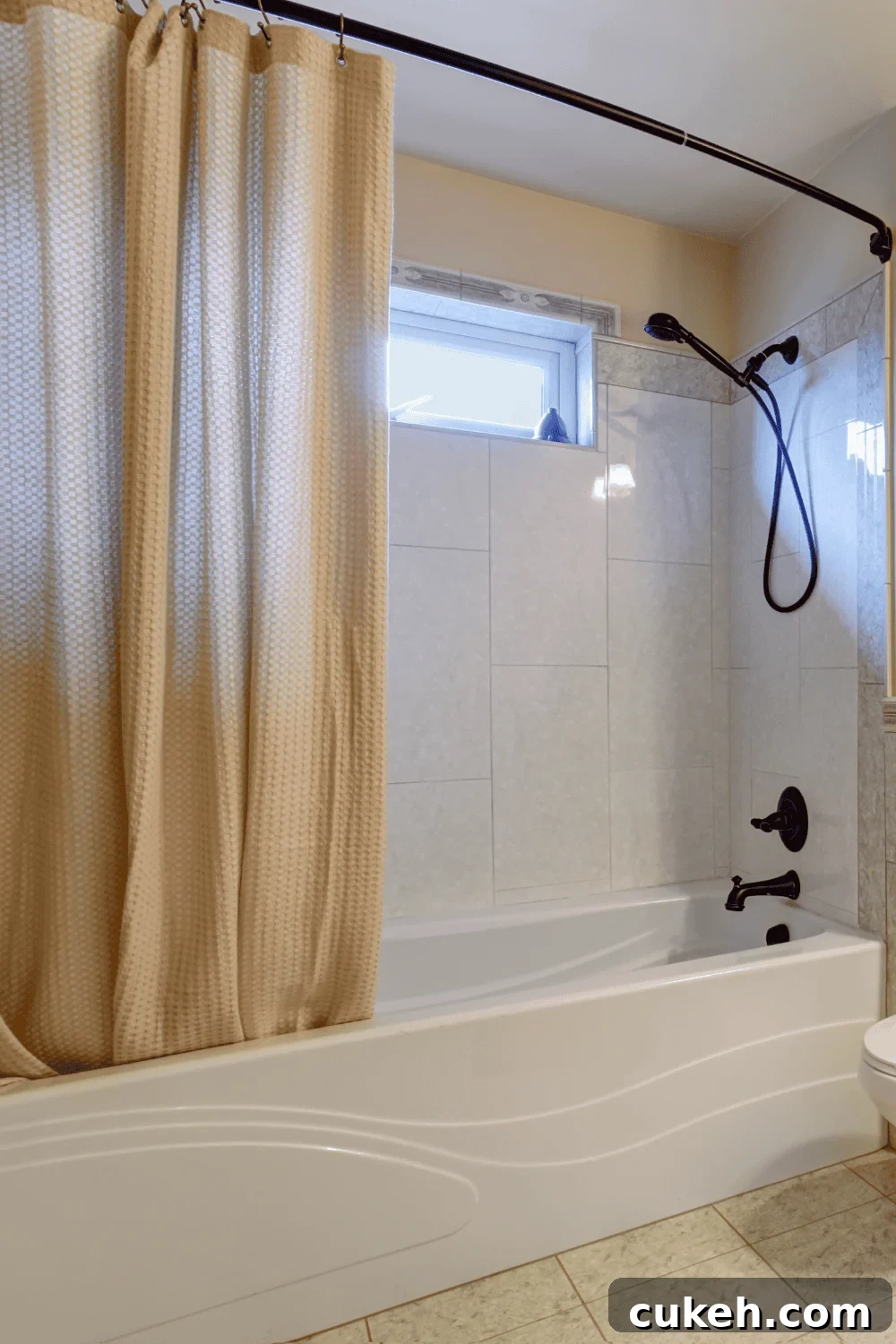
When so many toxic exposures are out of our control, focus on what’s doable.
Switching to a non-toxic shower curtain is an easy and relatively affordable step you can take to reduce your family’s daily exposure to VOCs, phthalates, and other harmful chemicals.
This guide covers:
‘); “>
Why plastic shower curtains are bad for your health and why PVC is the worst‘); “>
What to use instead — natural fibers like cotton, linen, or hemp‘); “>
How to decide if you actually need a shower curtain liner‘); “>
The least-bad materials for a liner‘); “>
A sneaky trick to watch for to avoid PFAS in shower curtains‘); “>
Top non-toxic shower curtain brands from small businesses and big-box stores
Jump straight to the section you want:
- You’re Breathing In Toxic Chemicals from PVC (& Other Plastic) Shower Curtains
- A Non-Toxic Outer Shower Curtain Is the Easy Part: Go for Natural Fabric!
- Finding a Non-Toxic Shower Curtain Liner is Tricky…
- The “Least Bad” Materials for a Shower Curtain Liner Are PEVA or EVA
- Don’t Get Duped By Tricky Marketing!
- My Picks for Organic & Non-Toxic Shower Curtains
- Parachute
- Coyuchi
- Quiet Town
- Pottery Barn
- Magic Linen
- Union Salt Works
- Outlines
- Target
- Walmart
- Amazon
- Even More Places to Get Natural & Non-Toxic Shower Curtains
- What Else to Look for in Non-Toxic Shower Curtains
- How to Waterproof a Natural Fabric Shower Curtain
This guide contains product recommendations and the author may receive compensation for purchases made through some links. Recommendations are given in good faith.
You’re Breathing In Toxic Chemicals from PVC (& Other Plastic) Shower Curtains
Many shower curtains and liners are made from PVC, which is the worst material for toxicity. PVC often contains phthalates, lead, and other harmful additives that have been linked to hormone disruption, respiratory problems, and developmental concerns in children.
When you shower, heat and moisture can increase chemical leaching from the plastic into the air, and those chemicals can be inhaled or absorbed through the skin. Because bathrooms are hot and damp, plastic curtains can release more chemicals than other textiles kept in cooler, drier environments.
It’s also worth noting that other plastics and synthetic fabrics can pose risks. Polyester and similar materials can off-gas VOCs or be treated with chemical finishes. For the healthiest option, choose a natural curtain when possible.
A Non-Toxic Outer Shower Curtain Is the Easy Part: Go for Natural Fabric!
To reduce exposure, choose natural fabrics such as:
- Cotton
- Linen
- Hemp
Organic cotton is preferable because it avoids the pesticides used in conventional production. If organic options are out of budget, conventional cotton, linen, or hemp are still significantly better than plastic alternatives. The main environmental concern with conventional cotton is pesticide use during cultivation, rather than toxic residue on the finished textile for household use.
Finding a Non-Toxic Shower Curtain Liner is Tricky…
Natural fabrics are not water-resistant, so without a liner they may be prone to mold, mildew, or bacterial growth. Some people successfully use a single natural curtain if:
- The curtain has time to dry between showers because the bathroom is well ventilated or not heavily used
- The curtain is removed and washed every 2–4 weeks
If you can manage those care steps, you can minimize mold and mildew without a separate liner. If that isn’t practical, choose a PVC-free liner to protect the natural curtain and prevent moisture damage.
The “Least Bad” Materials for a Shower Curtain Liner Are PEVA or EVA
If you need a waterproof liner, select PVC-free alternatives like EVA, PEVA, or a washable polyester curtain rather than PVC. PEVA and EVA are typically phthalate-free and lower in VOCs, so they release fewer hazardous fumes while remaining waterproof and durable. Polyester is washable, while PEVA and EVA are wiped clean, so choose based on your cleaning preference.
PEVA and EVA are chemically related: PEVA is a variation of EVA that uses polyethylene in place of some ethylene. The practical takeaway is they’re both better than PVC for indoor air quality.
Don’t Get Duped By Tricky Marketing!
Watch for water-resistant treatments on otherwise natural curtains. Brands sometimes use undisclosed finishes to repel water, and these finishes can contain PFAS (“forever chemicals”). Phrases like “water-repellent technology,” “water-coating,” or “encourages water droplets to form and roll off” are warning signs that the fabric may be treated with chemicals you don’t want in your bathroom. Because manufacturers aren’t required to disclose PFAS on textile labels, stay vigilant and ask brands about their treatments when in doubt.
My Picks for Organic & Non-Toxic Shower Curtains
Parachute
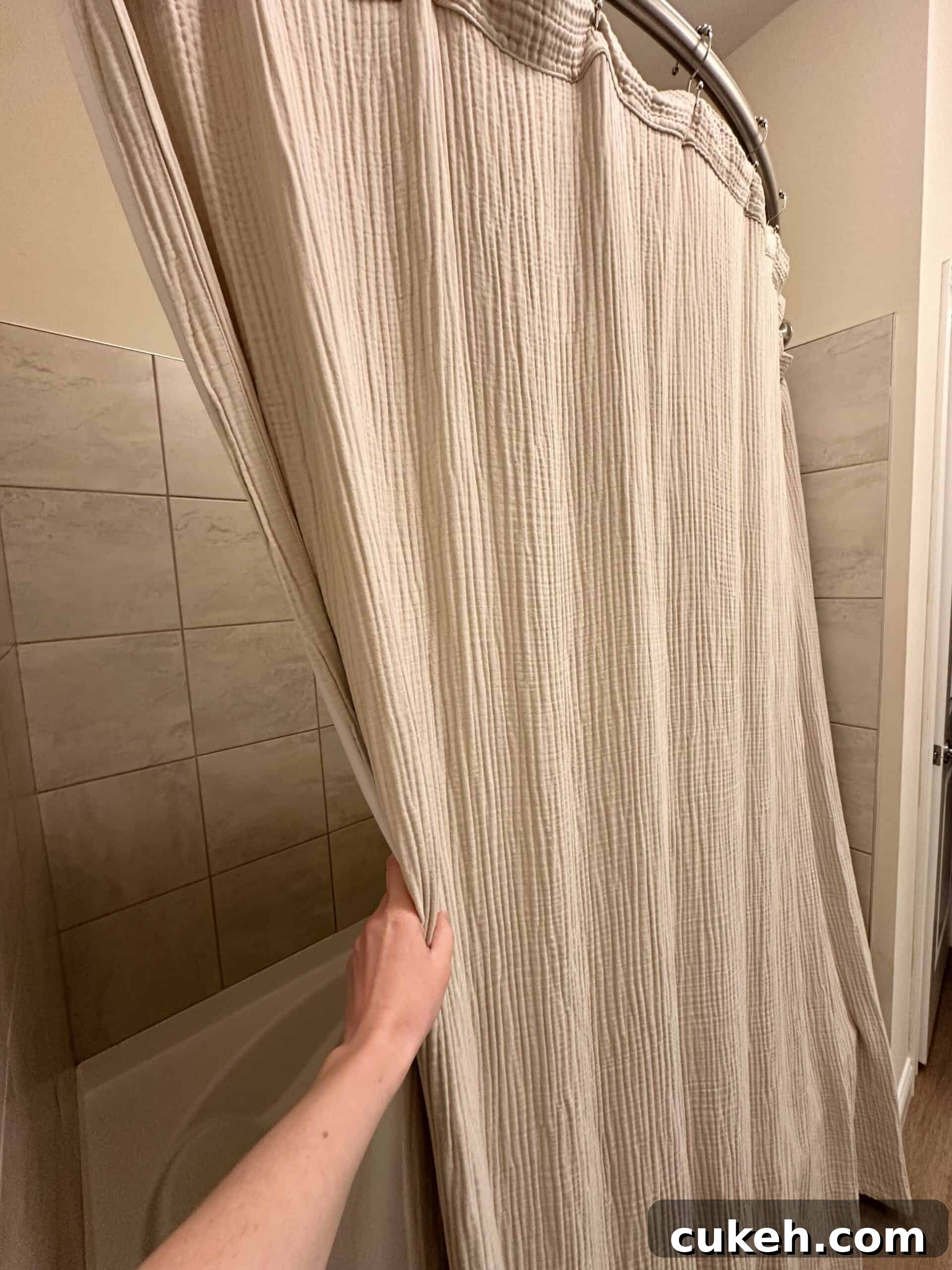
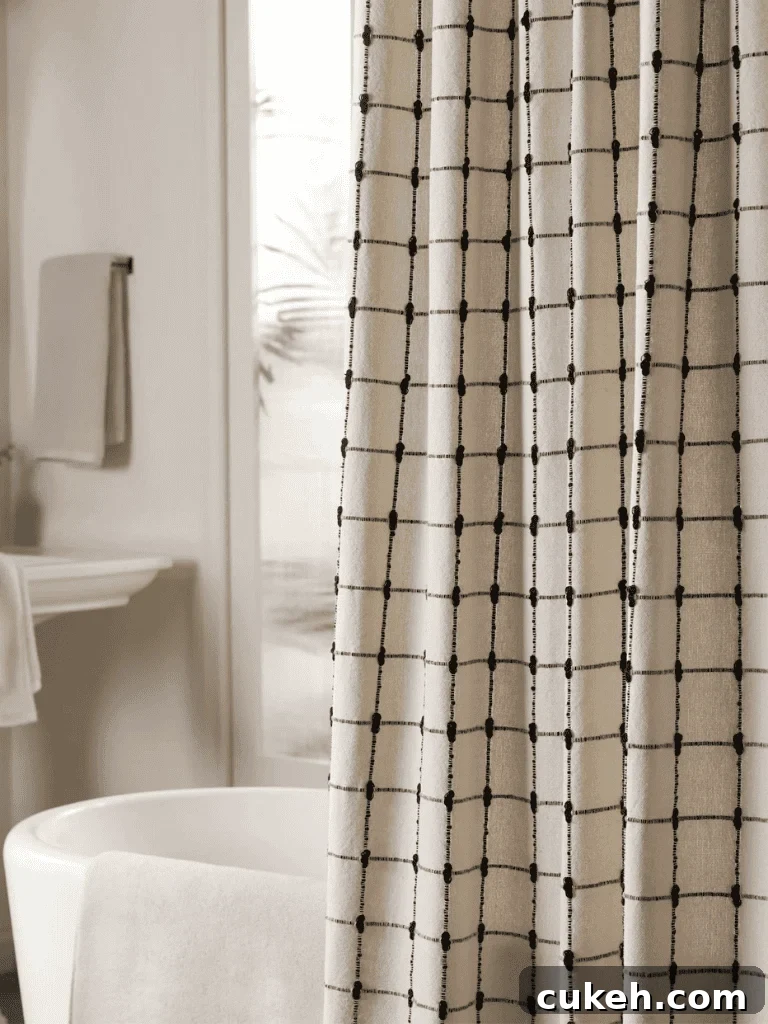
Material options:
- Linen (100% European flax)
- Organic Turkish cotton
- Conventional Turkish cotton
- Polyester (liner option)
Parachute offers high-quality natural options, some with certifications like GOTS or OEKO-TEX. The organic cotton styles dry quickly and work well in many bathroom styles.
Coyuchi
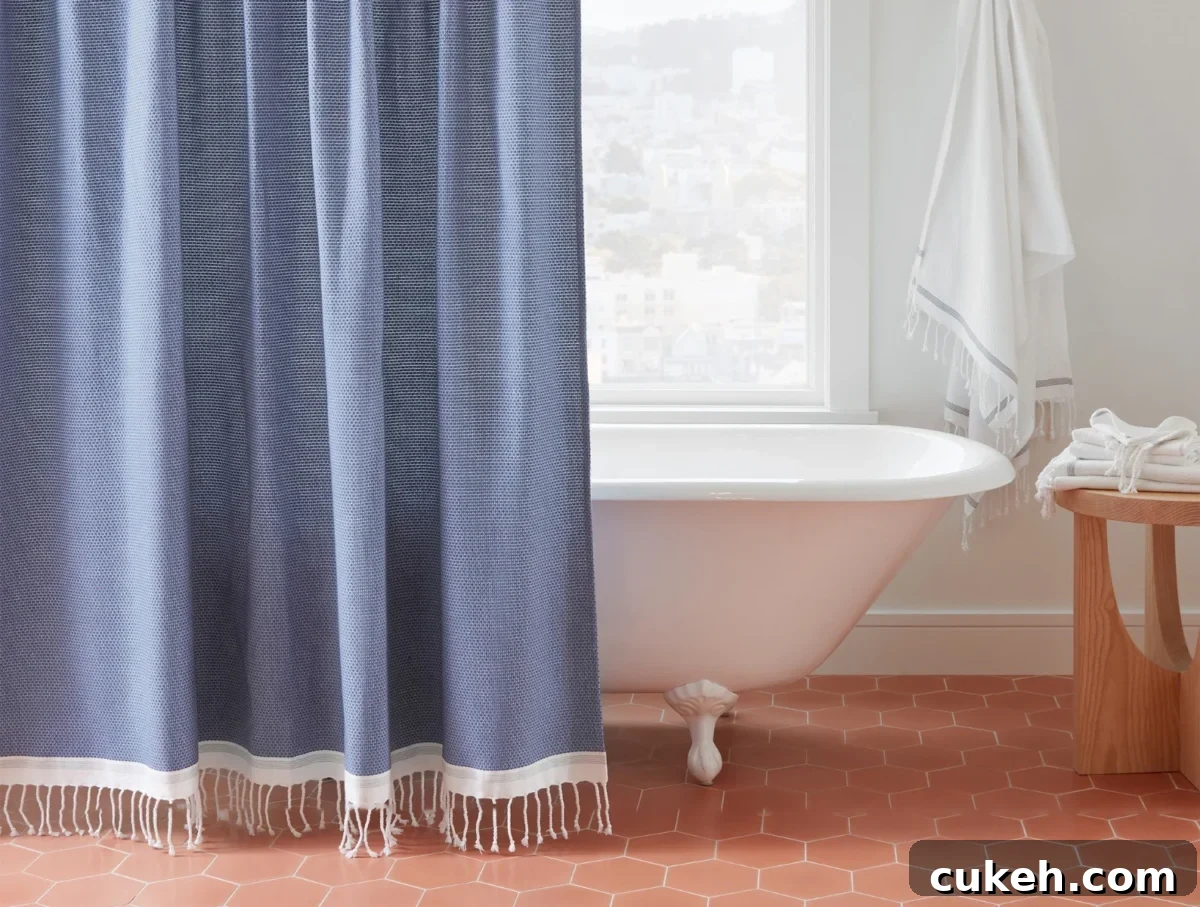
Material options:
- Organic cotton (100% GOTS certified)
Coyuchi’s curtains are thinner by design so they dry faster, and some styles may be used without a liner if you keep them clean and allow airflow.
Quiet Town
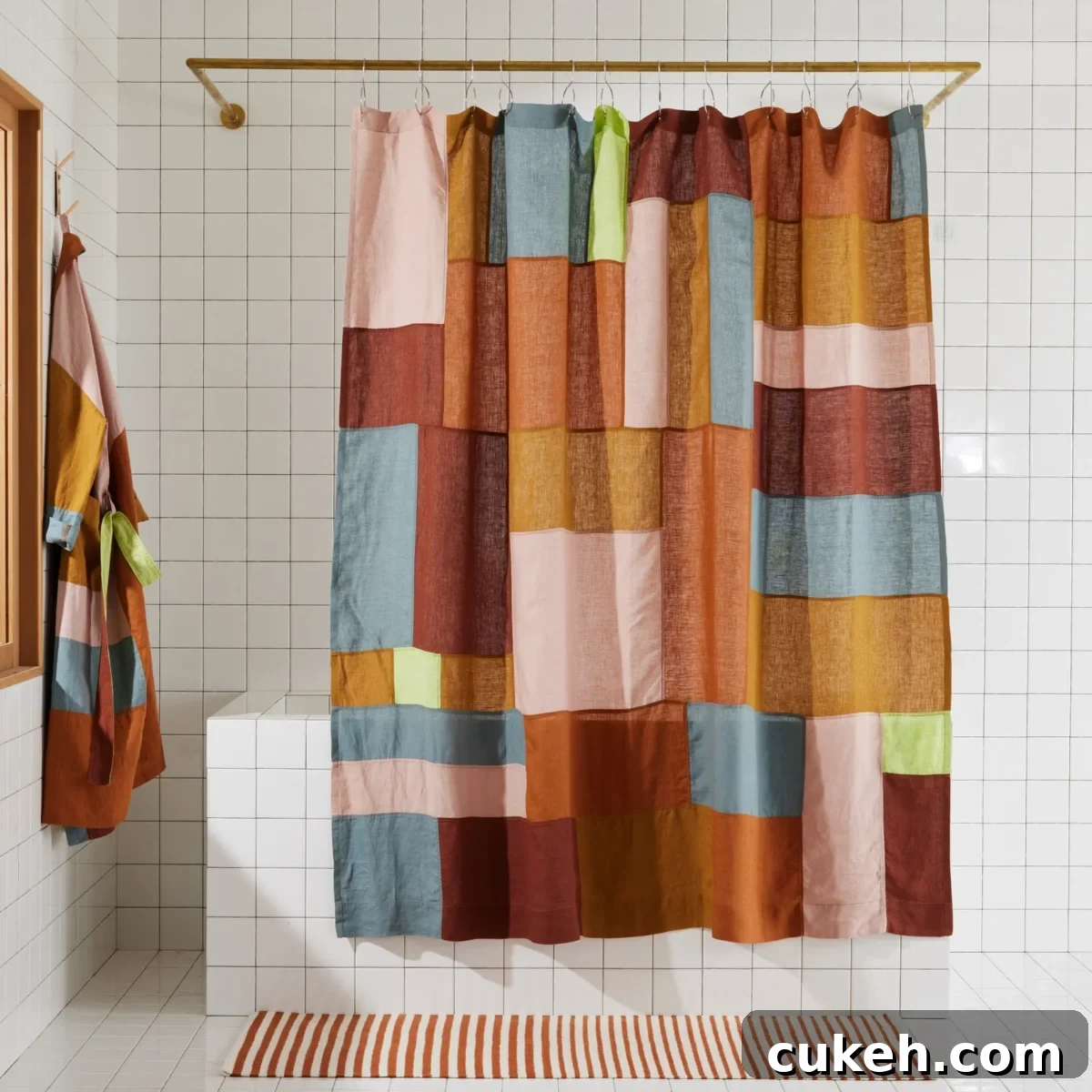
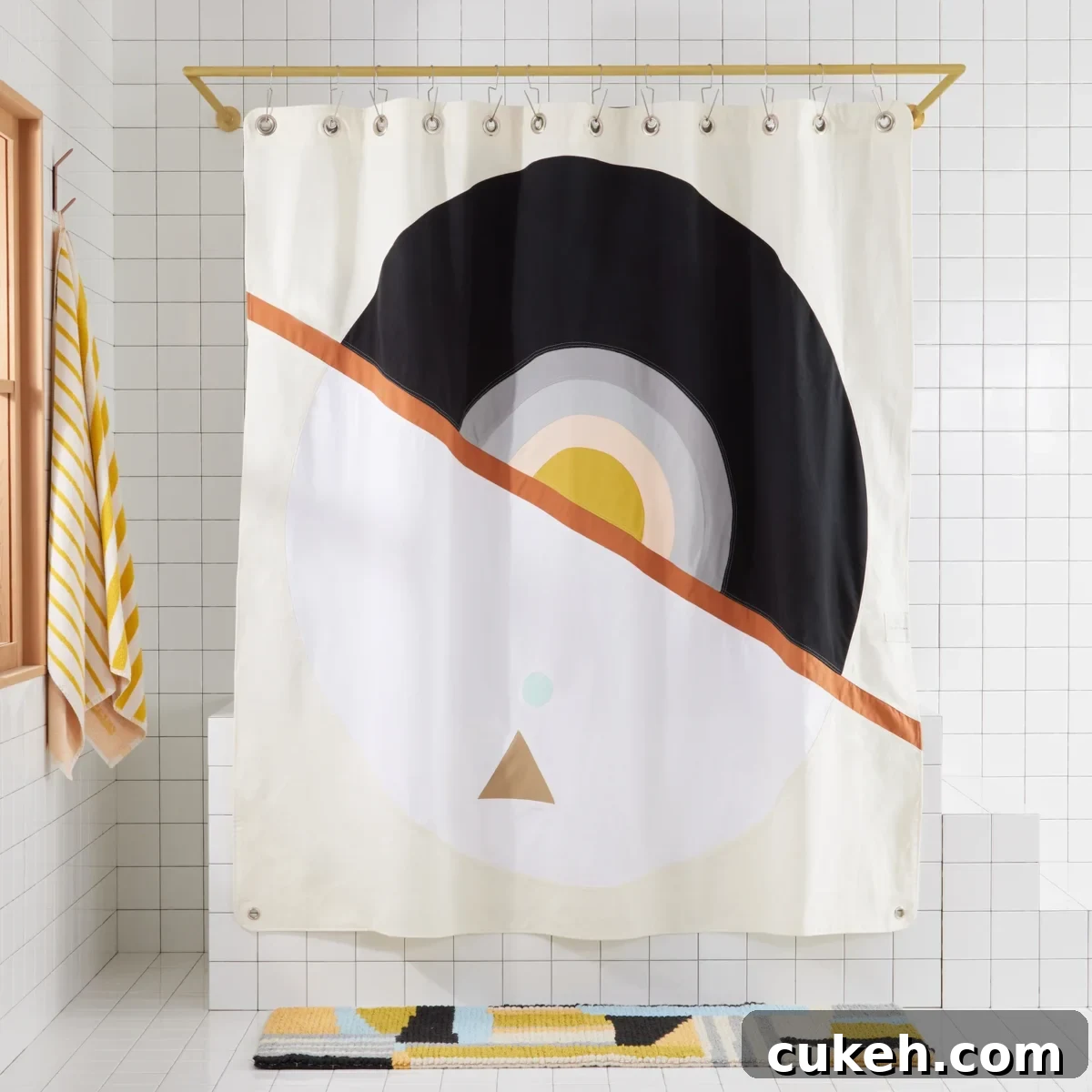
Material options:
- Cotton canvas (conventional, USA-milled, upcycled)
- EVA (standalone or liner)
Quiet Town offers many playful patterns and practical options like “End Bits” to reduce waste. Their EVA pieces can be used as liners or on their own.
Pottery Barn
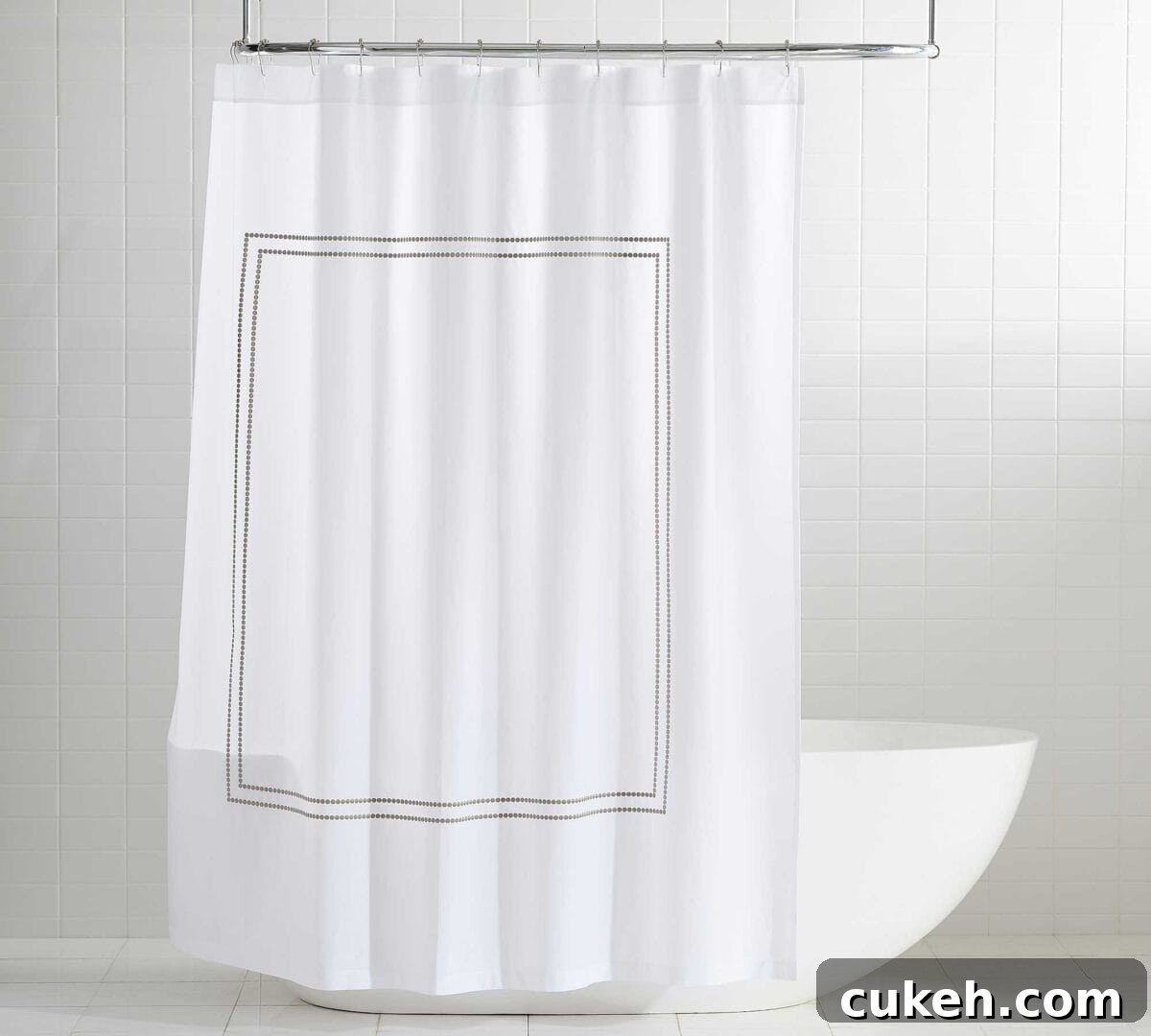
Material options:
- Organic cotton
- Conventional cotton
- Linen
- Cotton/polyester blends
- EVA (liner)
- Polyester (liner)
Pottery Barn has a range of options and commonly carries third-party certifications like GOTS, OEKO-TEX, or Fair Trade—check product details to confirm.
Magic Linen
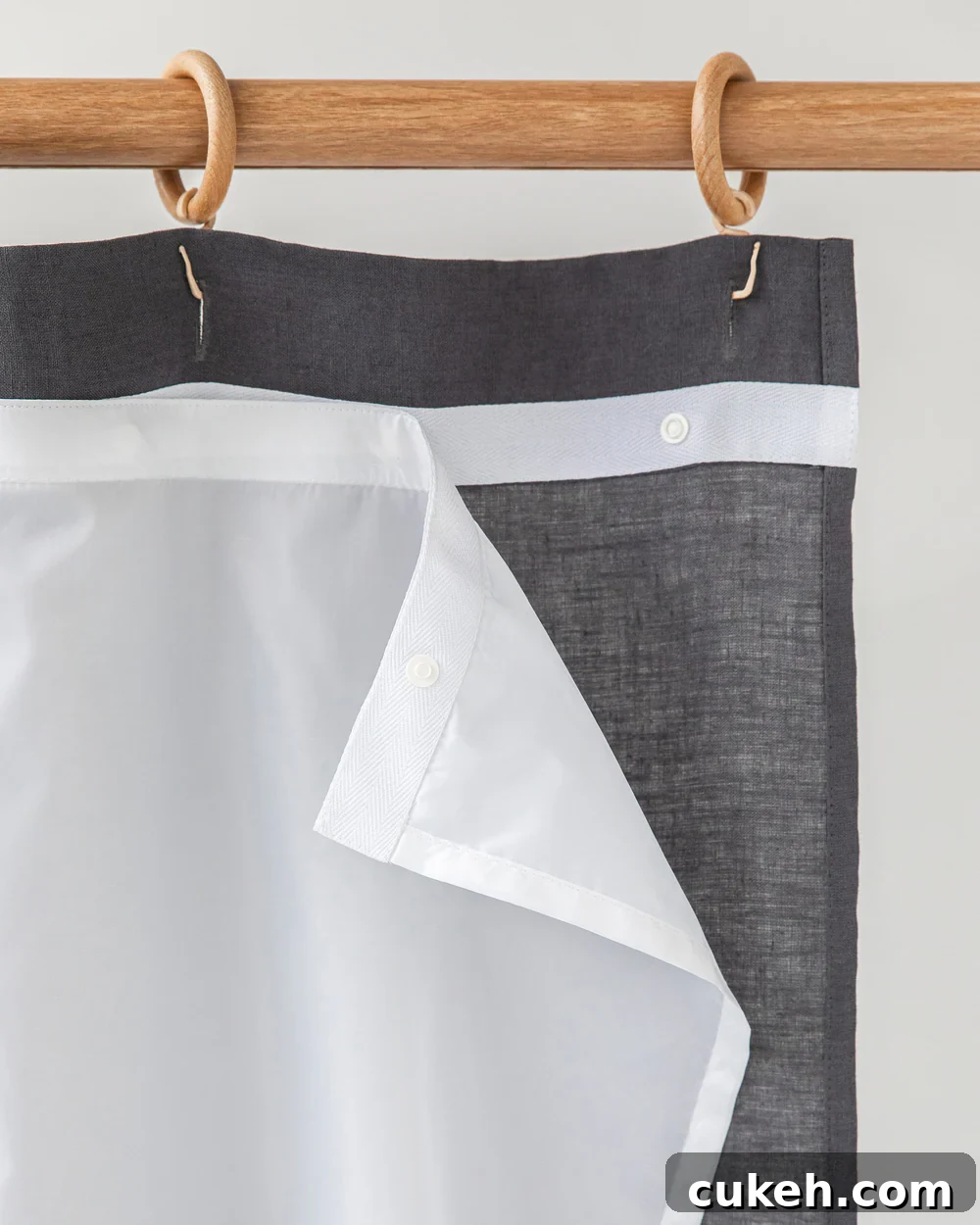
Material options:
- Linen
- Polyester (liner)
Magic Linen sells a two-piece system: a linen outer panel with a removable waterproof liner that snaps on, giving flexibility if you decide you don’t need a liner later.
Union Salt Works
Material options:
- Linen
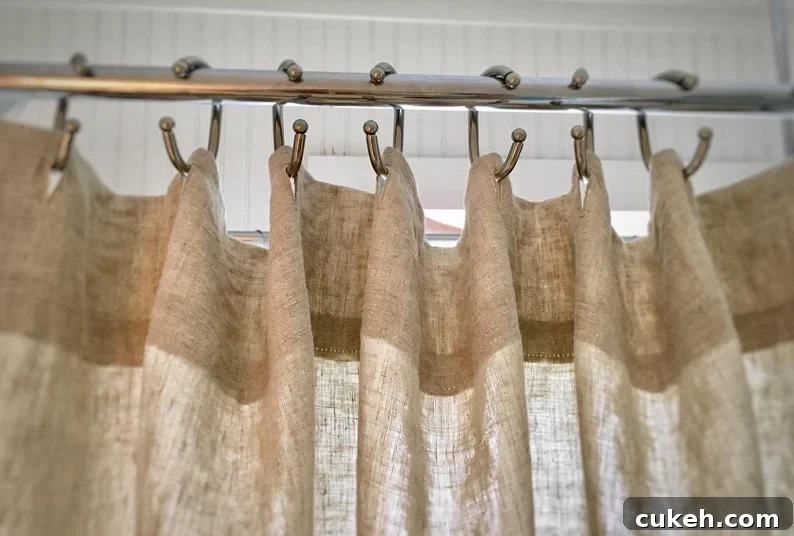
Union Salt Works offers handmade linen curtains in many sizes, made in the USA and available in natural or white.
Outlines
Material options:
- PEVA (combined with a cotton top)
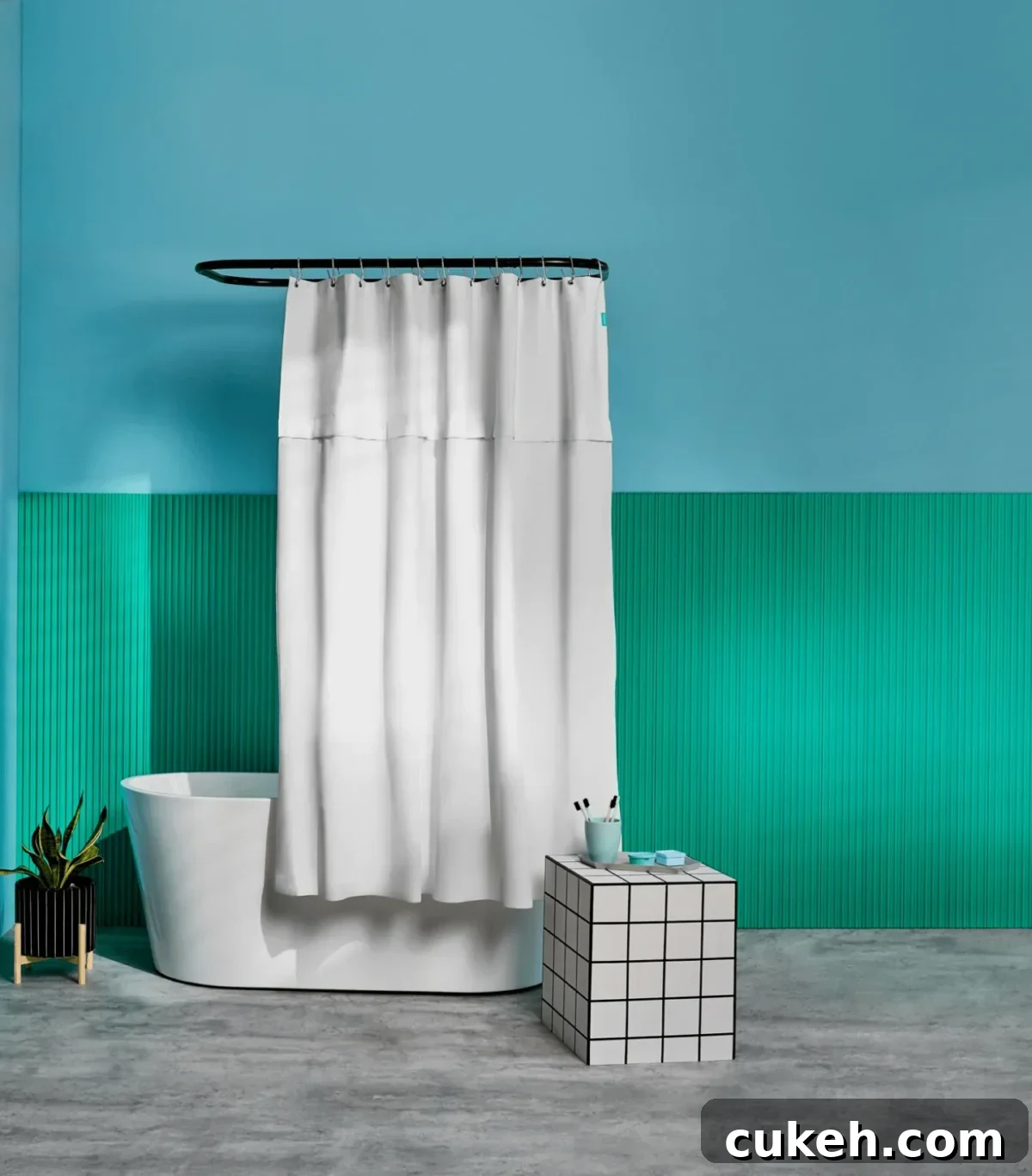
Outlines pairs a reusable, machine-washable cotton top with a removable PEVA bottom. The PEVA liner is independently tested to ensure it’s PVC-free, and the company offers a recycling program for used liners.
Big-box options:
Target
- Threshold (OEKO-TEX certified conventional cotton)
- Magnolia (OEKO-TEX certified conventional cotton)
- Lin ers: Threshold (PEVA); Room Essentials (PEVA or polyester/cotton blend); Pillowfort (PEVA)
Walmart
- Bean Products (hemp, organic cotton, conventional cotton, or linen)
- Psoiuetr (linen options)
- Lin ers: Barossa (PEVA); Inosoo (PEVA); ComfiTime (EVA)
Amazon
- Awellife (cotton/linen blend)
- Peri Home (OEKO-TEX certified conventional cotton)
- INK + IVY (OEKO-TEX certified conventional cotton)
- Laura Ashley (conventional cotton)
- Lin ers: Amazon Basics (PEVA); AmazerBath (EVA); Barossa (PEVA)
Avoid polyester curtains that advertise an unspecified water-repellent coating—those coatings can signal PFAS treatments.
Even More Places to Get Natural & Non-Toxic Shower Curtains
- Bean Products (hemp, organic cotton, conventional cotton, linen)
- Boll & Branch (organic cotton)
- The Citizenry (linen, conventional cotton)
- Rawganique (hemp, organic cotton, linen)
- Quince (linen, organic cotton)
What Else to Look for in Non-Toxic Shower Curtains
Beyond material choice, consider these factors:
Non-toxic dyes: If you choose a colored curtain, prefer brands that use low-impact or organic dyes. Look for OEKO-TEX or MADE SAFE certifications, or choose undyed fabric.
Third-party certifications: Certifications like GOTS, OEKO-TEX, and MADE SAFE help verify environmental and chemical safety claims. GOTS covers organic textile production and social criteria; OEKO-TEX checks for a broad list of banned substances; MADE SAFE screens for chemicals of concern with stricter standards in some areas. Certifications add confidence but can be expensive for small producers, so don’t hesitate to ask brands about their sourcing and processing practices.
How to Waterproof a Natural Fabric Shower Curtain
If you want to avoid plastic but make a natural curtain more water-resistant, you can apply a natural waterproofing wax to the back of the curtain. Waxing can reduce water penetration and is made from natural ingredients in many formulations. Note that waxed curtains are not machine washable; wipe them clean and reapply wax as needed, typically every year or two.
Related guides:
- Non-Toxic Bath Mats
- Organic Bath Towels
- Cozy Organic Robes
I hope this guide helps you choose a healthier shower curtain for your home.
If you have other questions about shower curtains, leave a comment.