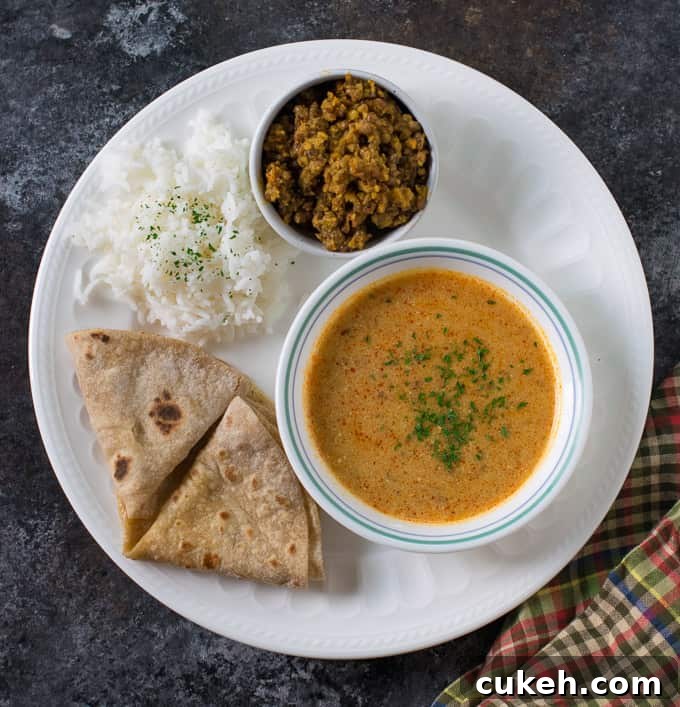
If you’re searching for easy everyday dinner ideas, this Instant Pot moth bean recipe is sure to become a favorite. This protein-rich curry is comforting and filling, perfect with hot phulkas or steamed rice. The quickest way to cook moth beans is in a pressure cooker — either a stovetop cooker or an Instant Pot.
Moth beans are small brown beans that resemble mung beans, though mung beans are green and have a slightly different flavor. Moth beans are also called matki, mat bean, Turkish gram, or dew bean. Sprouted moth beans (sprouted matki) are highly nutritious as well.
Moth bean nutrition and health benefits
Moth beans are rich in iron, calcium, magnesium, manganese, zinc, potassium and vitamin B9. They are also a good source of plant protein, making them a useful alternative to chickpeas or black beans. Because they are high in protein and fiber, moth beans help you feel full longer, which can support weight management. Their zinc content supports immunity, and the protein helps with muscle and bone health.
Coming from a Rajasthani family, lentils and beans are a daily staple in our home. Today I share two traditional Marwari recipes using moth beans: a dry moth bean masala (sukhe moth) and moth bean kadhi. These are commonly served together with roti and rice. You can make either one or both.
This Instant Pot moth bean curry is gluten free. It is not strictly vegan because the kadhi uses yogurt; vegans can substitute coconut yogurt and use oil instead of ghee.
Since the Jain festival Paryushan was ongoing when I made this, the recipes below are prepared without onions, garlic or leafy greens — a traditional Jain variation suitable for tithis like Aatham and Chaudas.
FAQs about moth bean / matki
Can I cook moth beans without soaking?
Yes — you can cook them directly, but they will need a longer pressure-cooking time. See recipe notes for options.
Is pressure-cooking necessary?
Pressure cooking is highly recommended. Cooking moth beans in an open pot can take hours and requires frequent attention; the pressure cooker is much faster and mostly hands-off.
Can I cook beans and rice together using pot-in-pot (PIP) method?
Rice cooks faster than beans, so you can cook both together only if the beans are pre-soaked to reduce their cook time.
How to cook moth bean / matki in an Instant Pot
Learn several ways to cook moth beans in the Instant Pot, including pot-in-pot rice cooking.
Ingredients
- 1.5 cup dry moth beans / matki
- 3 cups water (for cooking)
For cooking rice (pot-in-pot, optional)
- 1 cup basmati rice
- 1.5 cup water
- Pinch of salt
Instructions
- Rinse the moth beans under cold water 3–4 times, rubbing them gently between your fingers. Drain and refill with fresh water.
- If you pre-soak the matki, use double the water for soaking. Before cooking, discard the soaking water and add fresh water at a 1:2 bean-to-water ratio for cooking.
- This yields cooked moth beans that are not watery or soupy and can be used as needed.
- I prefer to cook moth beans on High Pressure with the valve on SEALING and then allow Natural Pressure Release (NPR).
- Choose a cooking option that suits your schedule:
- Option 1: Cook beans directly without soaking — cook 15 minutes plus NPR.
- Option 2: Cook after a short soak (about 1 hour) — cook 9 minutes plus NPR.
- Option 3 (pot-in-pot): Place a trivet and some water in the inner pot, then cook beans in an Instant Pot–safe bowl on the trivet. This keeps the inner pot cleaner. Cook time: 17 minutes NPR for unsoaked beans, 12 minutes if soaked 1 hour.
- Option 4: To cook rice with the beans, pre-soak the beans 5–6 hours so both cook in the same cycle using pot-in-pot. Place soaked beans with water in the inner pot, set the long-leg trivet, and place the rice bowl on the trivet. Cook 4 minutes plus NPR; no need to soak rice.
- With pot-in-pot, both beans and rice cook together in one cycle. Pick the method that works best for you.
Notes
The detailed moth bean kadhi recipe with step-by-step photos and the dry moth bean sabji are provided below. Nutrition values are for cooked moth beans per serving (serves 4).
Nutrition (per serving)
Calories: 150 kcal | Carbohydrates: 27 g | Protein: 14 g | Fat: 1 g | Sodium: 28 mg | Potassium: 648 mg | Vitamin C: 1 mg | Calcium: 126 mg | Iron: 6 mg
Moth bean kadhi
This Rajasthani moth bean kadhi is a comforting no-onion, no-garlic dish. It pairs beautifully with rice and roti.
Ingredients
- ½ cup sour yogurt (khatta dahi)
- 2 tbsp chickpea flour (besan)
- 2.5 cups water (or more if needed)
- ¼ tsp turmeric (haldi)
- 2 cloves (optional)
- 3 peppercorns (optional)
- Salt to taste
Tempering (tadka) for kadhi
- ½ tbsp ghee
- Pinch of hing (asafoetida)
- ½ tsp cumin (jeera)
- ½ tsp red chili powder (lal mirch / cayenne)
- Dry or fresh curry leaves
Instructions
- Whisk yogurt with 1 cup water until smooth using a handheld whisk or immersion blender.
- Warm this mixture on low heat until just warm (not hot), then add besan and whisk until lump-free.
- Increase to medium heat, add 1.5 cups more water and stir to combine. Add cloves, peppercorns, turmeric and salt.
- Bring to a boil, stirring occasionally. The kadhi will start to thicken. Reduce heat and simmer for 5 minutes, watching carefully to prevent overflow.
- Add half of the cooked moth beans (reserve the rest for the dry sabji) and simmer for 2–3 minutes.
- Prepare the tempering: warm ghee in a small pan, add cumin and hing, then add red chili, curry leaves and immediately 2 tablespoons water. Pour this tadka over the kadhi, stir and cook for another minute.
- Taste and adjust seasoning or consistency as needed. Serve hot with steamed rice and rotis.
Notes
- This version excludes ginger and garlic but remains flavorful. Sour yogurt is preferred; if unavailable, use lemon juice or amchoor for acidity.
- If you’re not observing a Jain tithi, add green chilies and chopped cilantro for extra flavor.
- For a vegan kadhi, use coconut yogurt and substitute ghee with oil.
- Kadhi thickens as it cools; add water to adjust consistency before serving.
Dry moth bean masala (sukhe moth) — Rajasthani style
Sukhe moth is a classic Marwari dry sabji. It’s typically served alongside moth bean kadhi, roti and rice for a complete meal.
Ingredients
- Half the quantity of the cooked moth beans (reserve half for the kadhi)
- 1 tbsp ghee
- Pinch of hing (asafoetida)
- ½ tsp red chili powder (lal mirch)
- ½ tsp kachri powder (see notes)
- ¼ tsp turmeric (haldi)
- 1 tsp coriander powder (dhania)
- 2 tbsp water (if needed)
- Salt to taste
Instructions
- Heat ghee in a pan. Add cumin and hing.
- Add the cooked moth beans, all the spices and salt. Stir to combine.
- Cook briefly for a minute to blend flavors. If the mixture seems dry, add 2–3 tablespoons water.
- Turn off the heat, taste and adjust spices if needed. Serve warm.
Notes
- Moth beans should be pressure cooked beforehand.
- Half the cooked beans are used in the kadhi; the other half are used for the dry sabji.
- Kachri is an authentic Rajasthani spice that adds tang. Substitute with ¼ tsp amchoor (dry mango) powder or a squeeze of fresh lemon if kachri is unavailable.
Pin or save this recipe for future reference. I’d love to hear from you — leave feedback in the comments or tag your photos if you try these recipes. Happy cooking and enjoy!