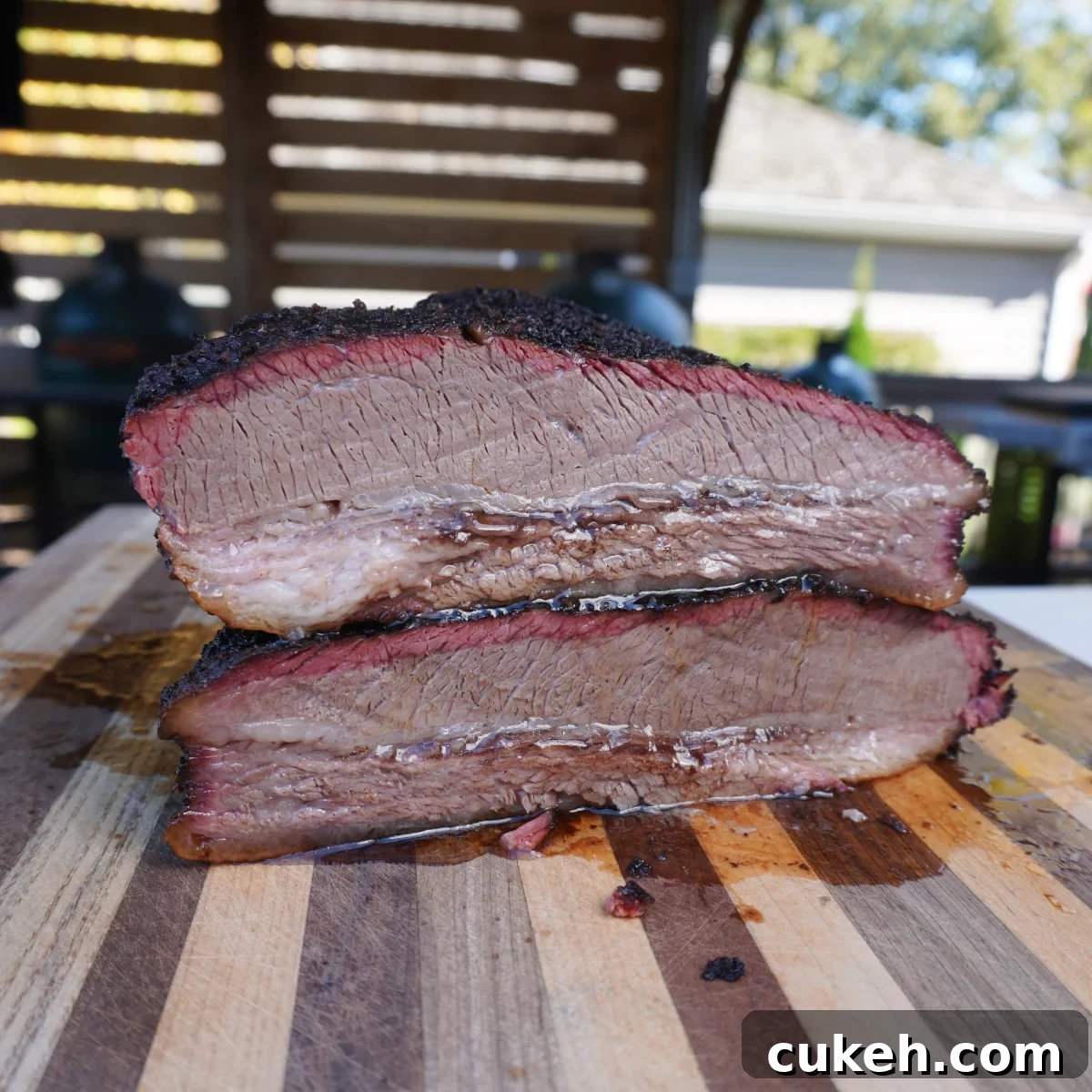
A perfectly smoked brisket is the king of BBQ. After tasting excellent brisket from places like Truth BBQ in Houston, I understand why this cut intimidates people. Through trial and error I’ve developed a simple, reliable method that delivers tender, flavorful, and juicy smoked brisket every time. Use this process and enjoy the results.
If you have leftover brisket, try making brisket burnt ends or an easy brisket hash for a savory breakfast—both are hearty and delicious.
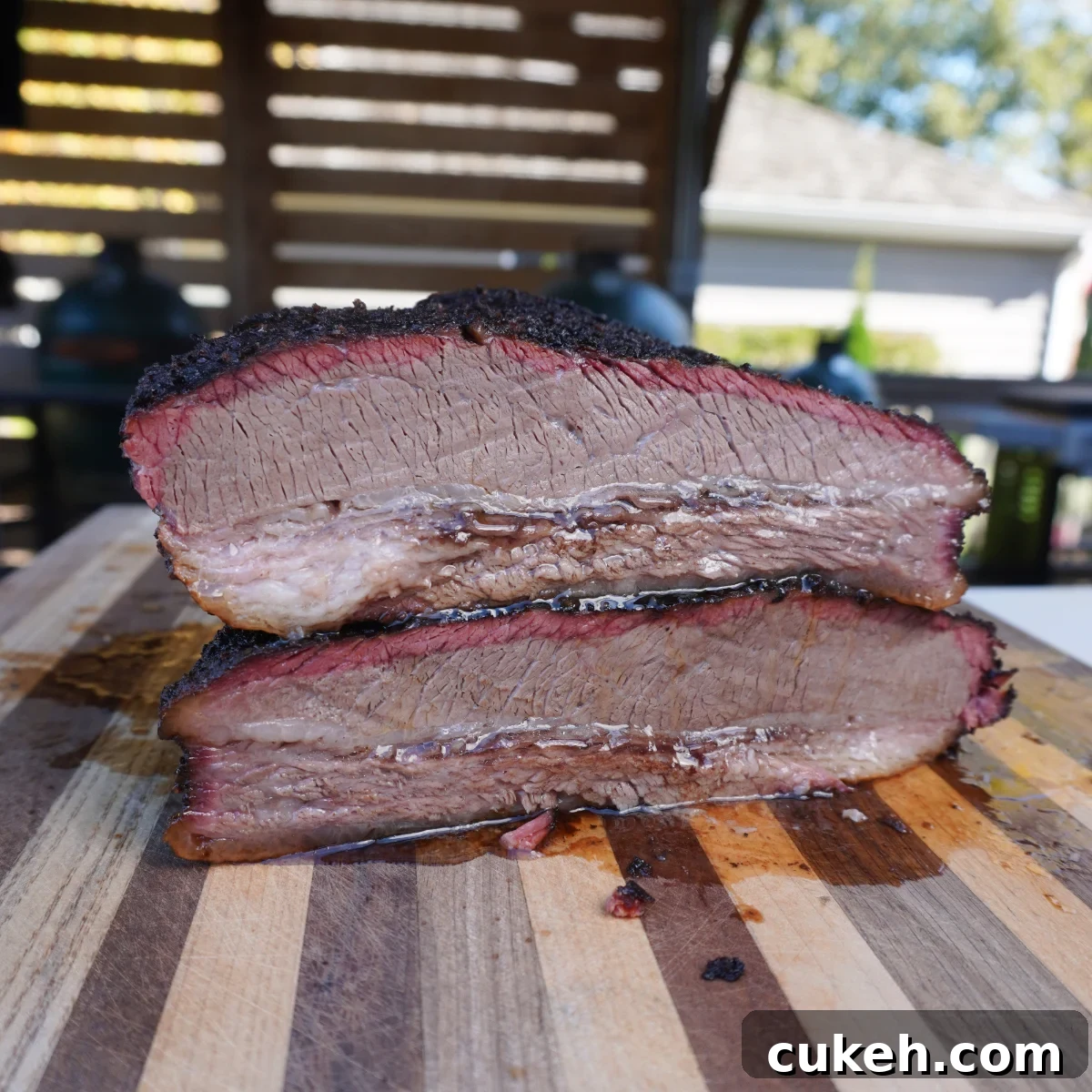
Table of Contents
- Why is a smoked brisket so popular.
- Where does the brisket come from?
- Tips to smoking a brisket
- Step 1: How to trim the brisket
- Recipe Tip
- Step 2: Season the brisket
- Step 3: How to smoke a brisket
- Recipe Tip
- Step 4: Rest the smoked brisket
- Frequently Asked Questions:
- Delicious smoked beef recipe ideas:
- Smoked Brisket Recipe
Why is a smoked brisket so popular.
Brisket stands out in the BBQ world because it rewards time and careful technique. Rich in fat and flavor, brisket can become the most tender cut when cooked correctly. The heavy connective tissue requires long, low-temperature cooking to break down and render, which is why “low and slow” is the preferred approach.
Where does the brisket come from?
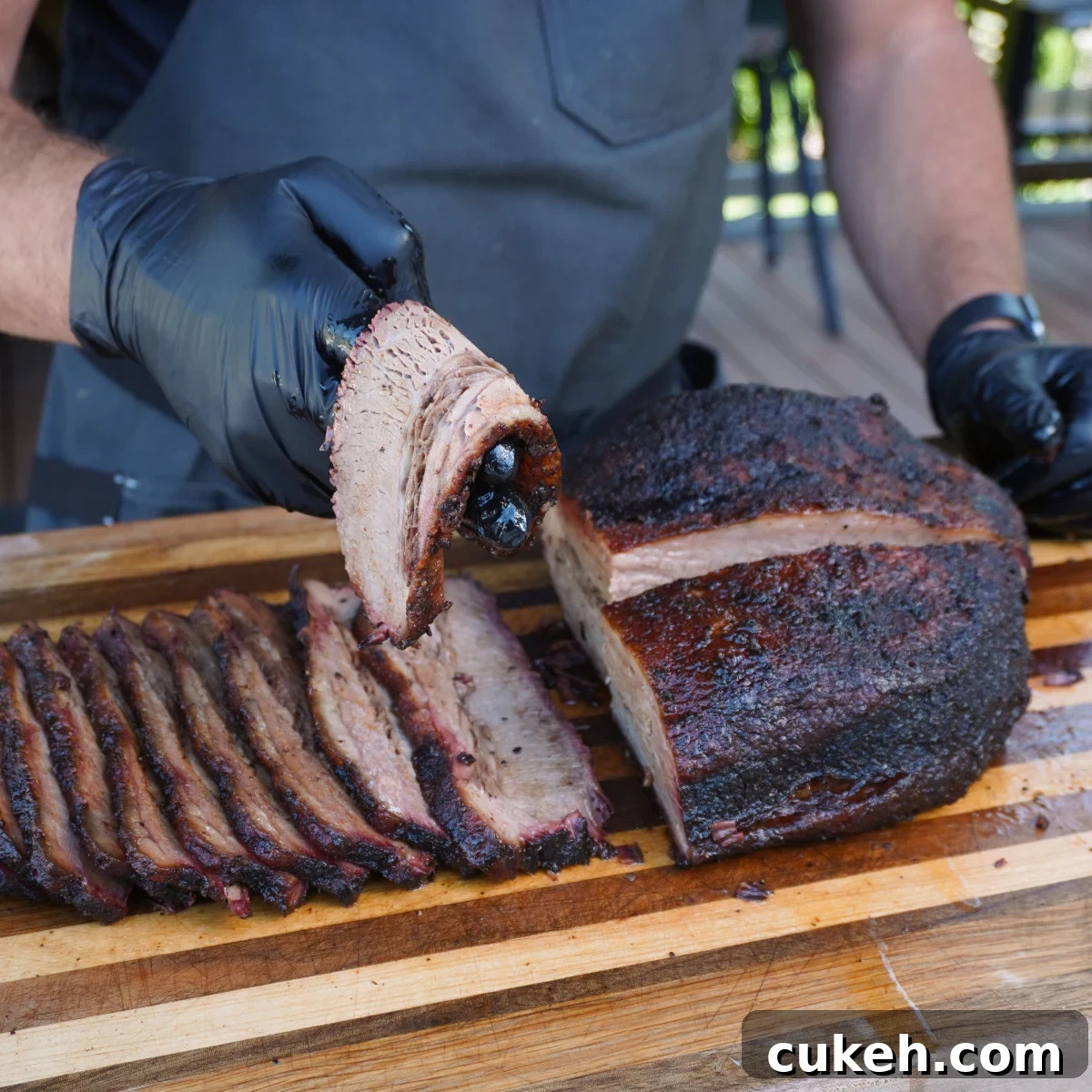
Each cow yields two briskets, making it a prized cut. Grade affects price and quality: USDA Prime has more marbling and richer flavor, while Choice is more affordable with slightly less marbling. The cut and trim level also influence cost—whole untrimmed briskets are often cheaper than pre-trimmed packages. I recommend buying an untrimmed brisket so you can trim it to your preference.
Tips to smoking a brisket
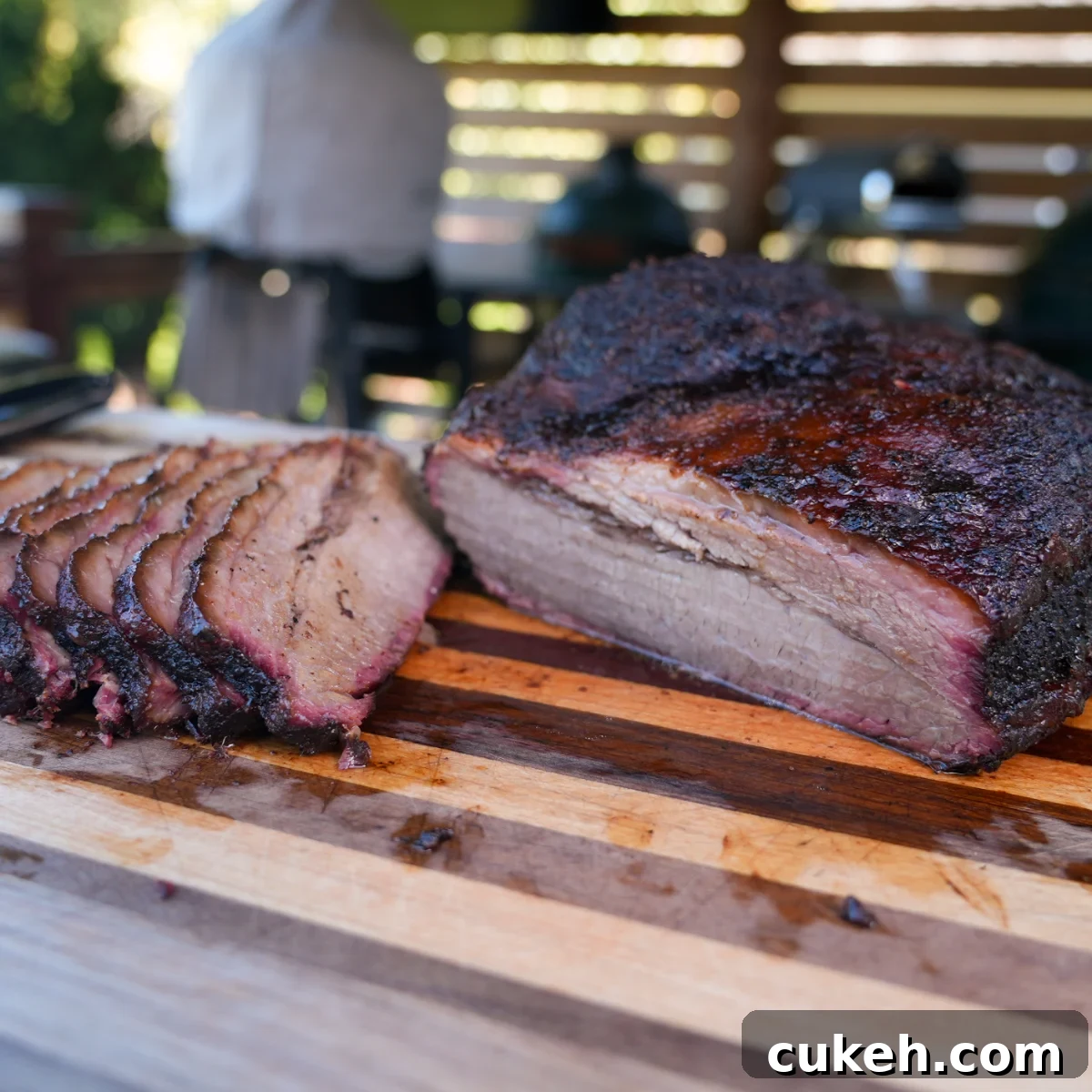
There are many valid approaches to smoking brisket; different pitmasters will swear by their methods. Still, the essentials are consistent: proper size, careful trimming, steady temperature, and the right grill setup.
Size
A brisket between 10–13 lbs is ideal. Smaller briskets risk drying out, while larger ones can cook unevenly and take excessively long.
Trim
Trimming is critical. Remove hard, non-rendering fat and shape the brisket so it cooks evenly. Keep a uniform fat cap—about 1/4 inch—on one side.
Temperature
Maintain a steady low temperature to render fat and connective tissue without overcooking the meat. Consistency is essential for tender, juicy results.
Grills
You can smoke brisket on any grill if you can hold a steady low temperature.
- Smoker: The traditional choice—requires managing wood and fire. Apple, hickory, or oak add great flavor.
- Pellet Smoker: Easier to use and maintains consistent temperatures for long cooks—ideal for overnight smoking.
- Komodo-style / Ceramic Grills: Use an indirect setup with a heat deflector or plate setter to protect the meat from direct heat.
- Charcoal Grills: Indirect setups work well; use charcoal baskets or low-and-slow kits and keep a steady supply of coals.
Step 1: How to trim the brisket
Trimming takes patience. Start by chilling the brisket in the freezer for one hour to firm the fat for easier trimming. Remove any loose fatty ends, then use a trimming knife to carefully sculpt the meat, shaving thin slices at a time. The point often has a hard fat deposit; remove thin layers until the shape is even. Aim for about a 1/4-inch fat cap when finished.
Recipe Tip
Take your time when trimming. Remove small, thin slices of fat to avoid over-trimming.
Step 2: Season the brisket
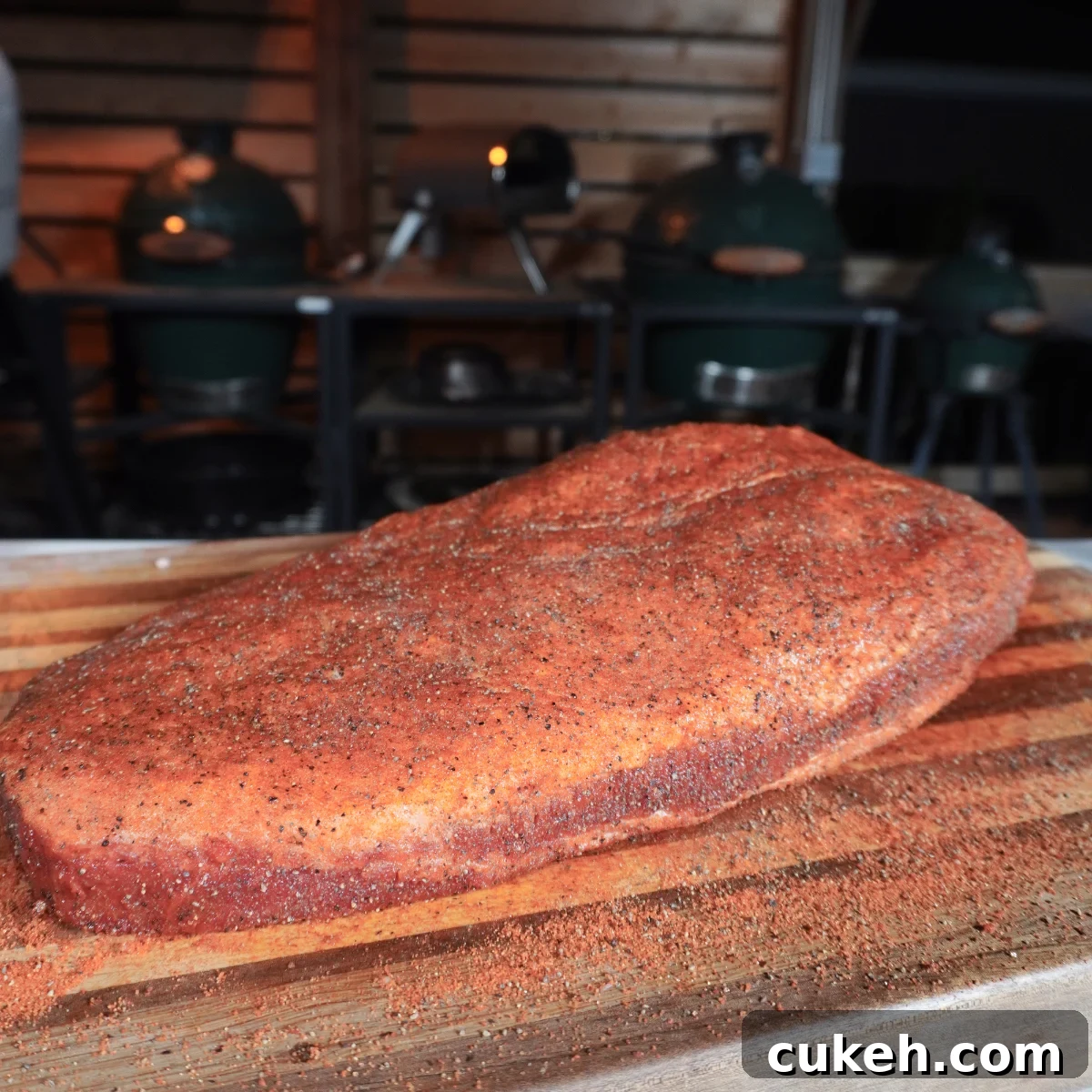
Brisket accepts a lot of seasoning. Spread yellow mustard over the trimmed brisket to act as a binder—the mustard flavor won’t be noticeable after cooking. I like a combination of a salty, paprika-forward all-purpose rub and a layer of coarse black pepper to build a dark, flavorful bark.
Step 3: How to smoke a brisket
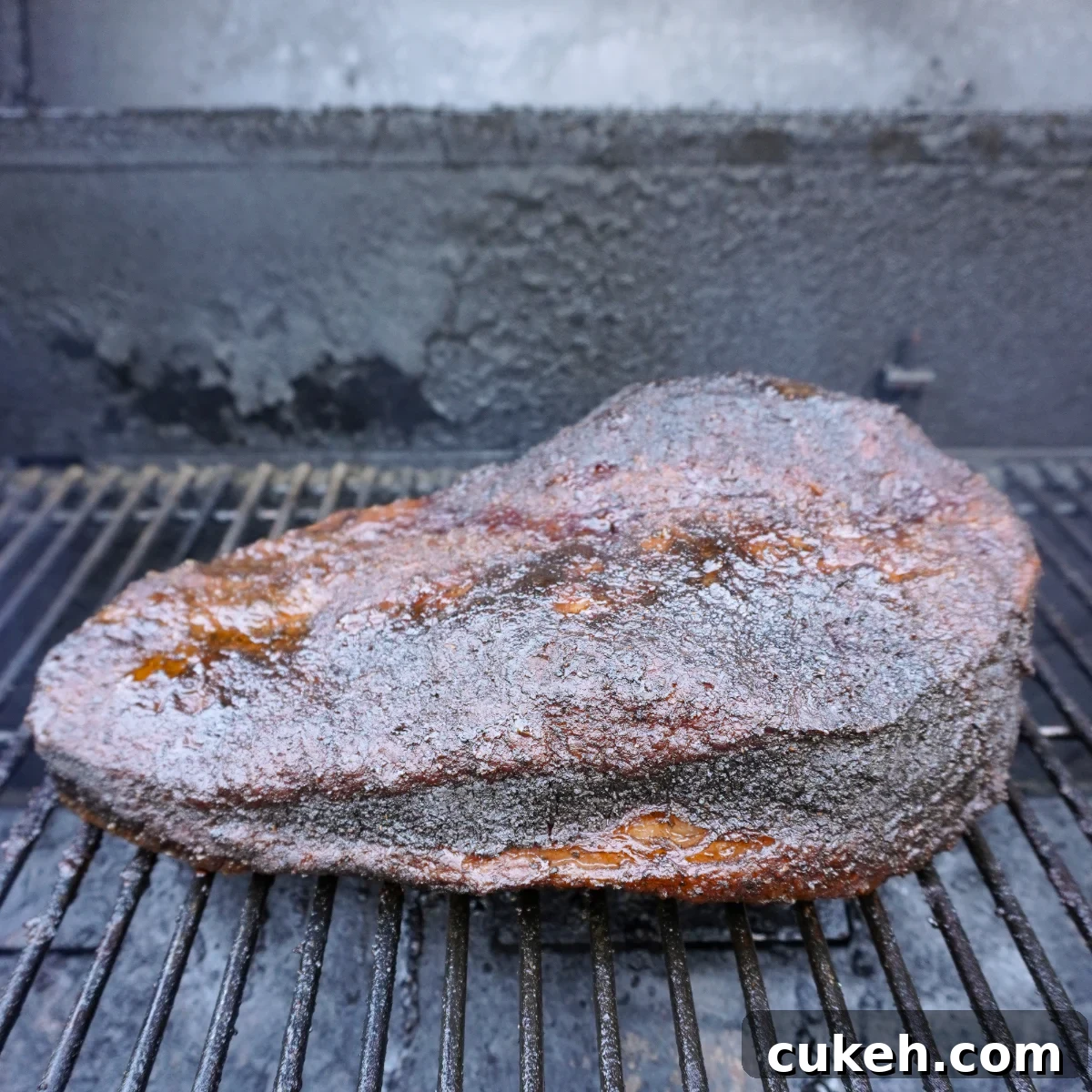
Low and slow is the guiding principle. Preheat your smoker to 225°F (107°C) and ensure your fuel source is ready. Place the seasoned brisket on the grate fat cap down and smoke until the internal temperature reaches about 170°F (77°C) and the bark has set—this often takes 7–9 hours but varies with size and conditions, so rely on internal temperature, not time alone.
When the brisket reaches 170°F, wrap it tightly in butcher paper or aluminum foil:
- Butcher paper: Holds moisture but allows some steam to escape, helping preserve a firmer bark.
- Aluminum foil: Seals in all moisture and can produce more tender meat, though the bark may soften if wrapped loosely.
Recipe Tip
If it’s your first brisket, wrap in aluminum foil for a higher chance of tender, juicy meat, even if the bark is slightly softer.
Raise the smoker temperature to 275°F (135°C) and return the wrapped brisket to the grill. Cook until the internal temperature reaches about 200–206°F (93–97°C), checking probe tenderness. If it’s not probe-tender at 200°F, continue checking every 30 minutes until it is.
Step 4: Rest the smoked brisket
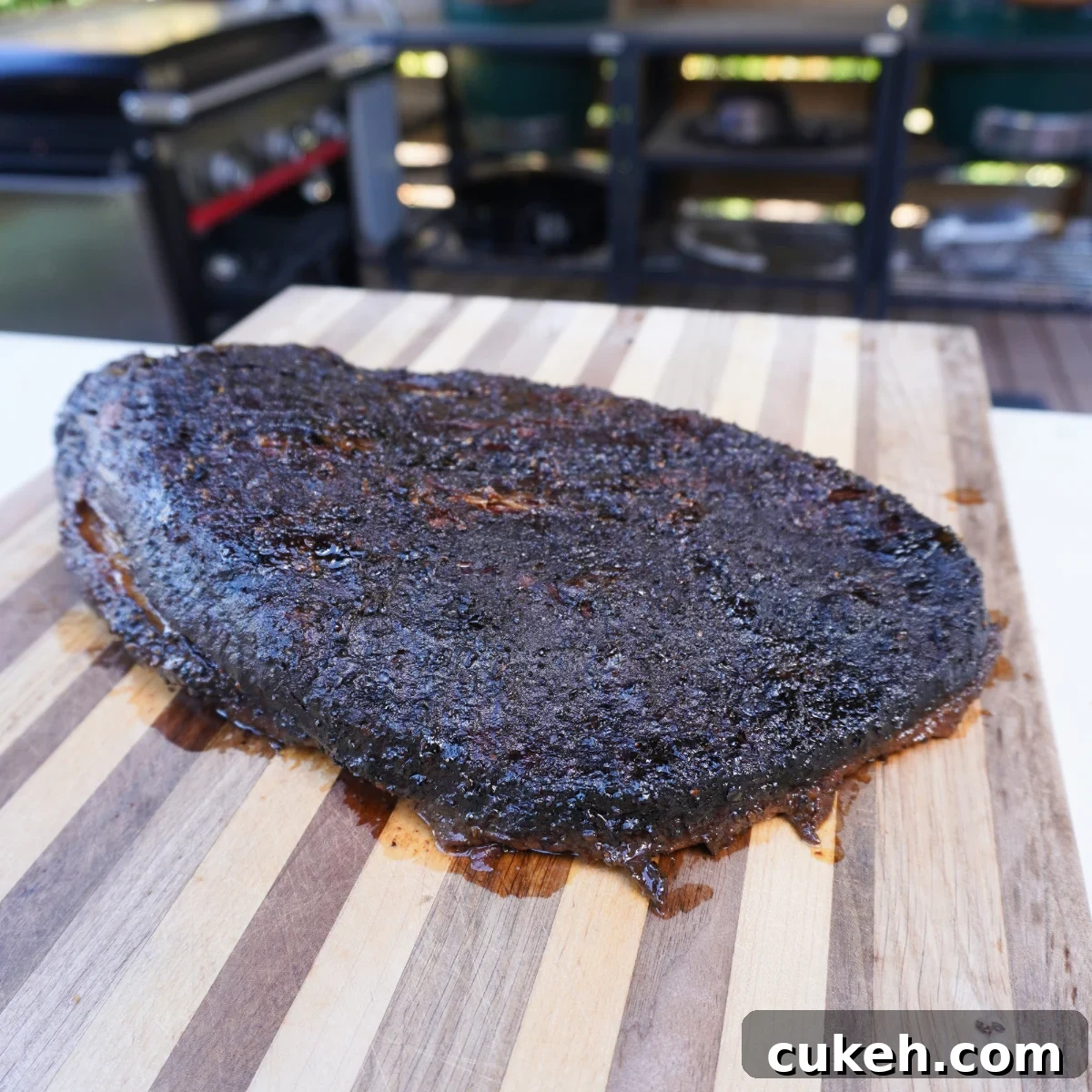
Resting is crucial. Remove the brisket from the grill and open the wrap briefly to let steam escape and stop carryover cooking. Rewrap and place the brisket in an insulated container like a cooler or a turned-off oven for about one hour. After resting, slice against the grain and serve.
Frequently Asked Questions:
Yes. These techniques can be adapted to an oven, stovetop, or gas grill. You don’t need specialized equipment like a Big Green Egg to get great results.
Delicious smoked beef recipe ideas:
Beef
Smoked and Shredded Corned Beef
Beef
Smoked Chili Hot Dog
Beef
Chuck Roast Burnt Ends
Beef
Beef Egg Roll Bowl
Pin
Smoked Brisket
Ingredients
- 13 lbs Beef brisket
- 4 tbsp Yellow mustard
- 1/4 cup Dad’s all purpose seasoning
- 4 tbsp Coarse black pepper
Instructions
-
Place the brisket in the freezer for 1 hour to firm the fat for easier trimming.
-
Trim the brisket with a sharp knife, removing loose fatty ends and shaping the meat carefully.
-
Remove thin, even slices of fat until the brisket has a uniform shape and about a 1/4-inch fat cap remains.
-
Spread yellow mustard all over the trimmed brisket to act as a binder for the rub.
-
Season with an all-purpose rub and a layer of coarse black pepper to build a dark bark.
-
Preheat the smoker to 225°F and ensure fuel is ready.
-
Place the brisket fat cap down and smoke for 7–9 hours, or until it reaches 170°F and the bark is set.
-
Wrap the brisket tightly in butcher paper or aluminum foil, keeping the wrap close to the meat.
-
Increase smoker temperature to 275°F and return the wrapped brisket to the grill.
-
Cook until the internal temperature reaches 200–206°F and the meat is probe tender, checking every 30 minutes if needed.
-
Remove from the grill and open the wrap briefly to let steam escape.
-
Rewrap and rest the brisket in an insulated container for 1 hour, then slice and serve.
Notes
If it’s your first brisket, wrap with aluminum foil for a safer path to tender, juicy meat.
Nutrition
Like this recipe? Rate and comment below!