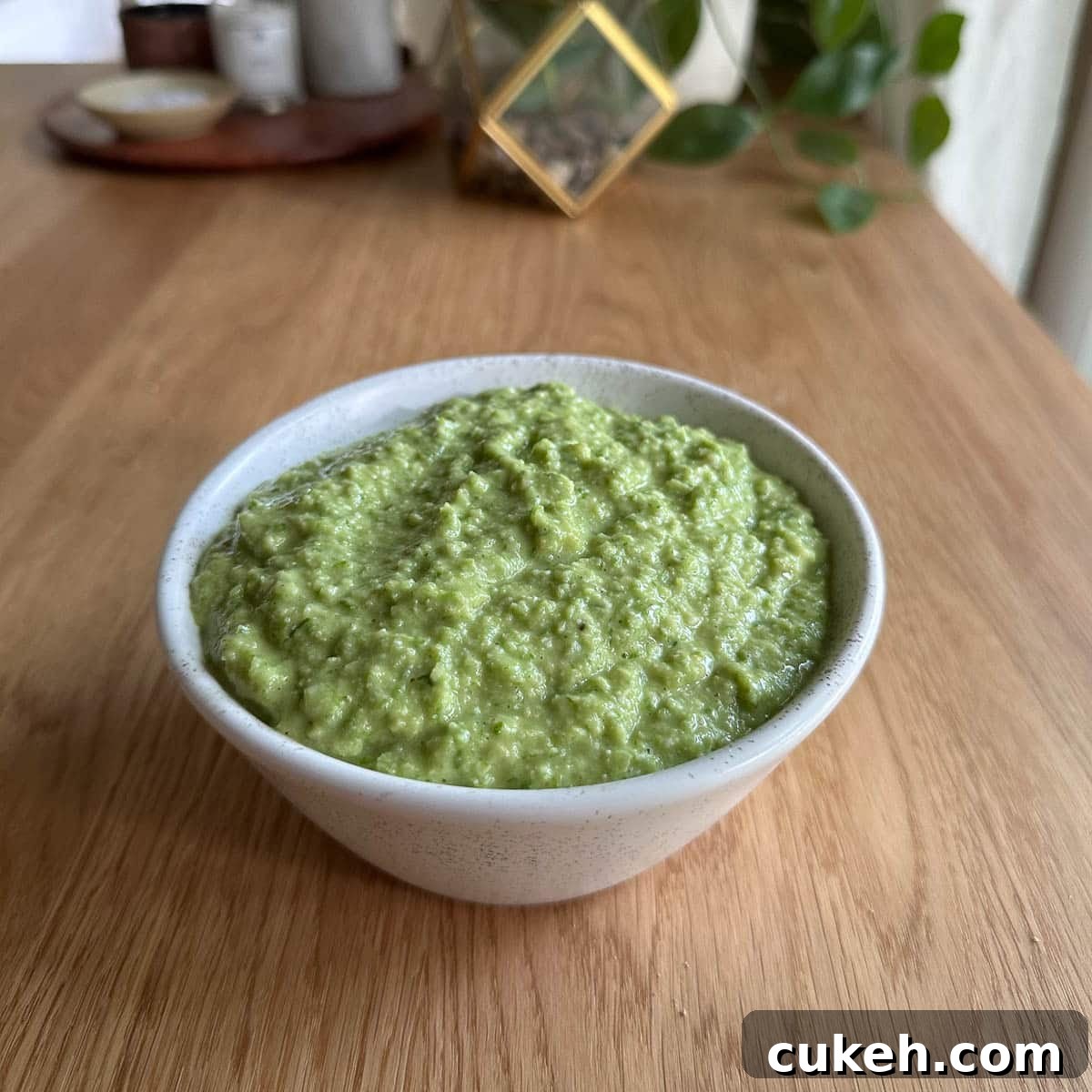
Garlic scape pesto is silky, bright, and piquant—the ideal taste of early summer. This is the original version from my Crisper Whisperer column on Serious Eats from the late 2000s, and it remains one of my favorite recipes.
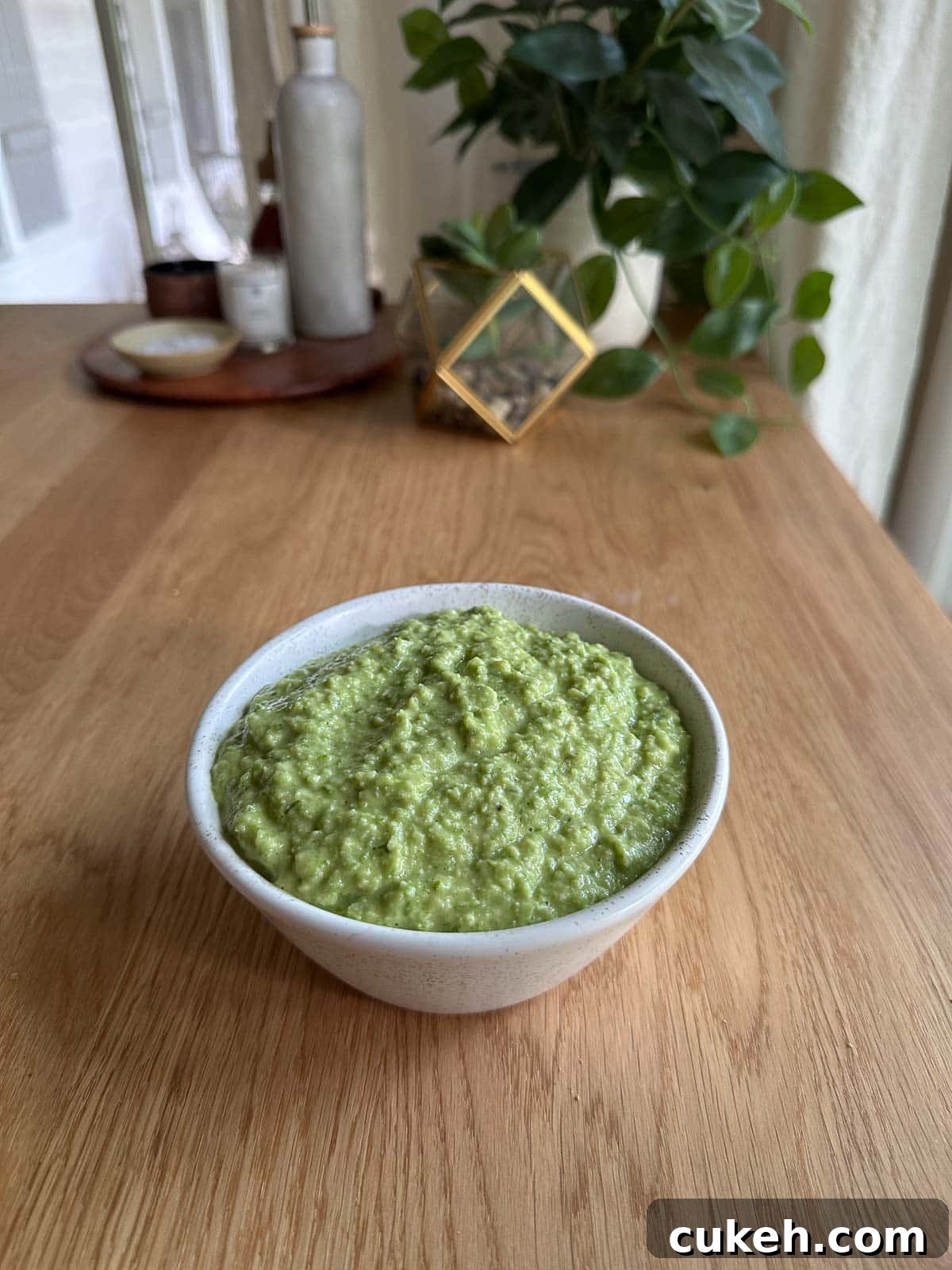
Why we love this recipe
Even after creating many other scape-based dishes, each scape season I come back to pesto. It’s simple, fast, and showcases the scapes’ sharp, garlicky personality in a way nothing else quite does.
This pesto delivers:
- Bold flavor, with the spicy, fresh bite of raw scapes
- Bright, lemony notes that lift the mixture
- Luxurious creaminess from olive oil and toasted pine nuts
- Savory depth from grated Parmigiano-Reggiano, so it holds up to hearty pastas and many other uses
Video: Garlic scape pesto
What are garlic scapes?
Garlic scapes are the tender, curly flowering stalks produced by hard-neck garlic varieties. When picked young they look like green curls with a closed bud on the end. Growers remove them to direct energy back into the garlic bulbs, but they’re also delicious on their own.
Compared with garlic cloves, scapes have more body and a greener, more herbaceous quality. Treat them like a vegetable, an aromatic, or an herb—then turn them into pesto when you have a pile to use up.
What you’ll need
At a glance, these are the ingredients used in this pesto:
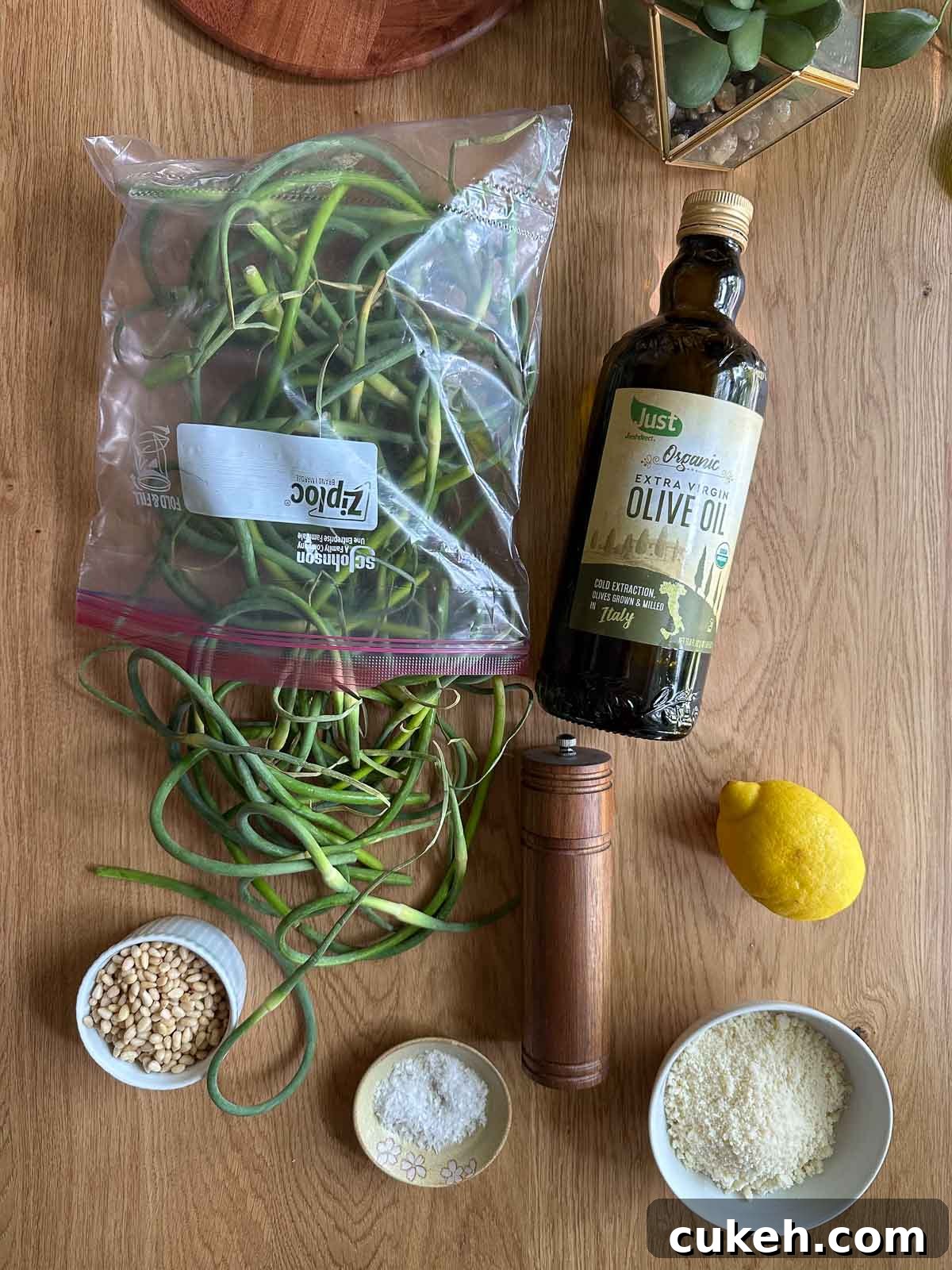
- About 16 medium garlic scapes, trimmed and coarsely chopped; remove the dried end and the top bud if it tastes overly strong.
- Everyday good-quality extra-virgin olive oil to add creaminess and roundness.
- Pine nuts, lightly toasted for their soft, buttery flavor that’s classic in pesto.
- Freshly squeezed lemon juice for brightness.
- Freshly grated Parmigiano-Reggiano for savory complexity.
How to make it
Making this pesto is quick and straightforward. The full method and proportions are in the recipe card below, but here are the key steps:
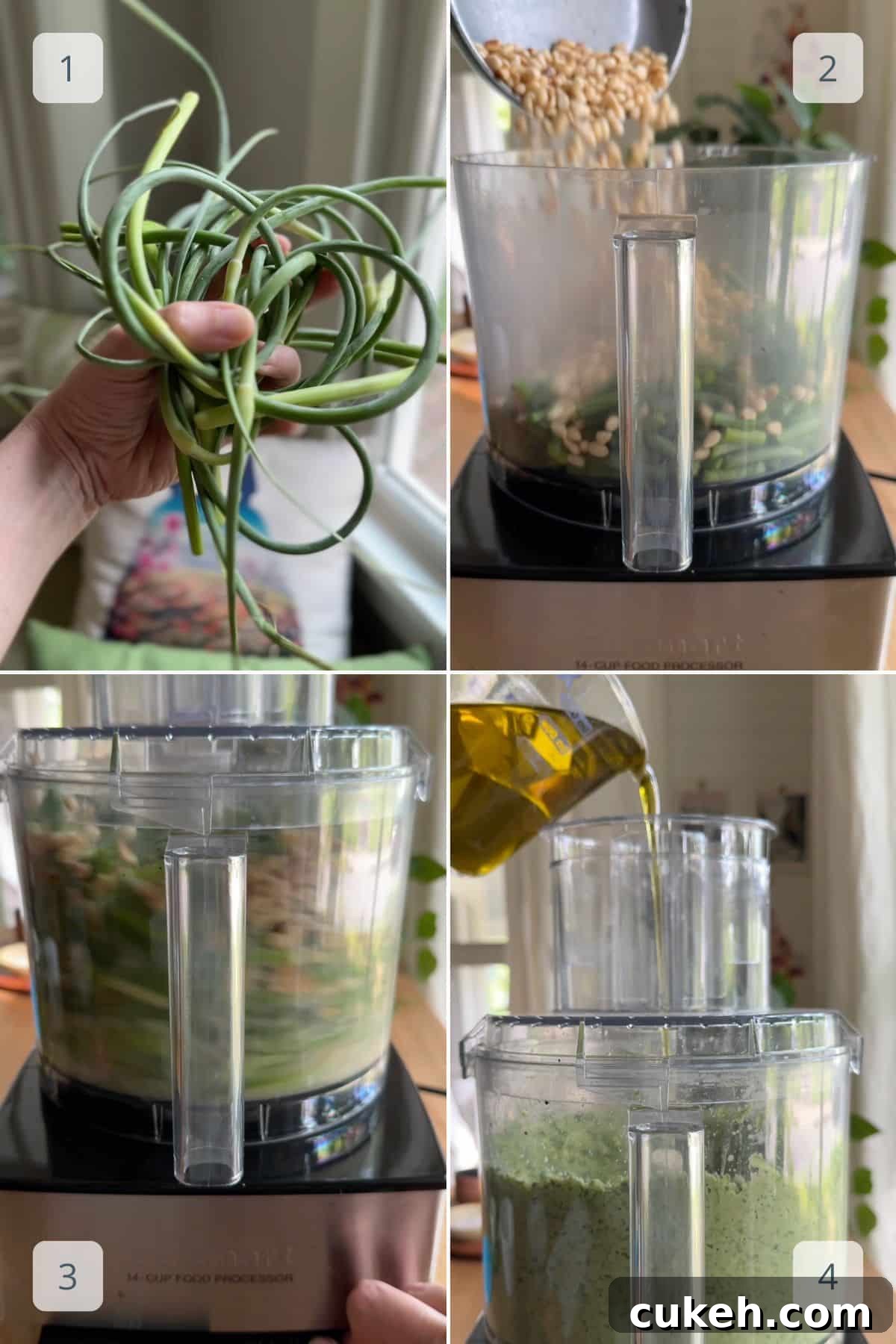
- Trim the scapes and lightly toast the pine nuts in a dry skillet.
- Combine the scapes, toasted pine nuts, lemon juice, salt, and pepper in a food processor.
- Pulse until the ingredients are chopped and combined, scraping the bowl as needed.
- With the motor running, slowly stream in the olive oil until incorporated, then pulse in the grated cheese.
Expert tips and FAQs
Stir a batch into cooked pasta, or use it as a finishing sauce for grilled meats and seafood. It’s excellent folded into scrambled eggs, spread on toast with tomato, spooned onto pizza or risotto, or tucked into an omelet or frittata.
Yes. A large food processor will handle multiple batches without changing the method—just scale the ingredients up.
Garlic scape pesto keeps well in the refrigerator for several days and freezes beautifully. It tends to mellow after freezing; if freezing, you may want to wait to add the cheese until after thawing. Defrost overnight in the fridge for best texture and flavor.
More favorite pesto recipes
- Lemony pesto
- Ramp pesto
More popular ways to use garlic scapes
- Garlic scape pasta
- Garlic scape hummus (no tahini)
- Garlic scape butter
- Garlic scape tart
- Savory frittata with potatoes, shiitakes, and garlic scapes
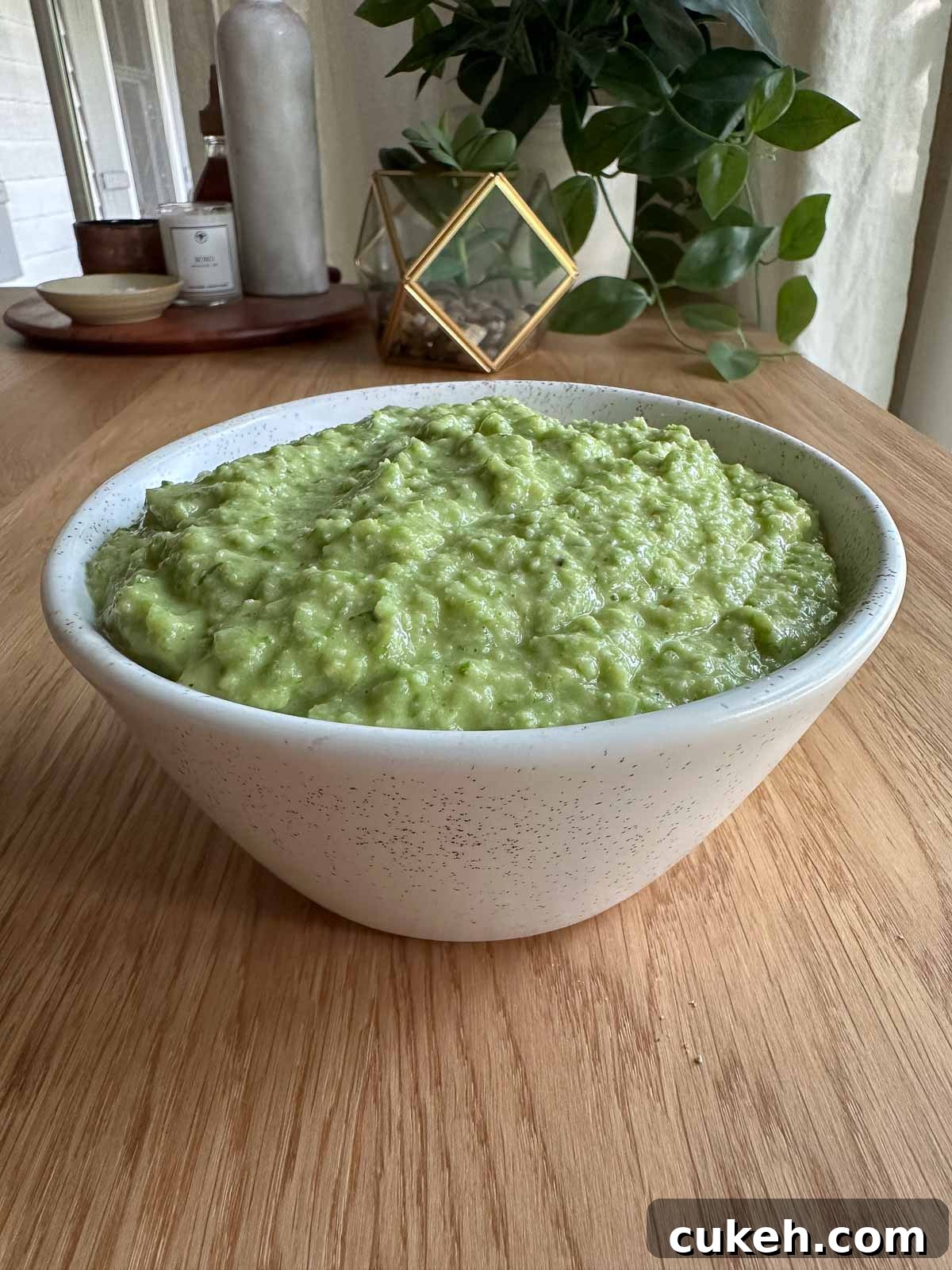
Garlic Scape Pesto
Comment
Print Recipe
Equipment
-
1 Food processor
Ingredients
- ¼ cup pine nuts
- ¾ cup coarsely chopped garlic scapes, about 16 scapes with buds removed
- 2 tablespoons freshly squeezed lemon juice
- ½ teaspoon fine sea salt
- ⅛ teaspoon freshly ground black pepper
- ½ cup extra-virgin olive oil
- ¼ cup grated Parmigiano Reggiano
Instructions
-
Lightly toast the pine nuts in a small, dry pan over very low heat, stirring until they begin to brown, about 2–3 minutes. Remove from heat and cool slightly.
-
Place scapes, toasted pine nuts, lemon juice, salt, and pepper in the bowl of a food processor fitted with the blade.
-
Pulse about 20 times, scraping the bowl once or twice, until the mixture is fairly well chopped and combined.
-
With the motor running, slowly stream in the olive oil through the feed tube until incorporated.
-
Add the grated cheese and pulse to combine. If freezing, consider adding the cheese after thawing for a fresher texture.
Notes
- If scapes are not freshly cut, trim a thin slice from the bottom and remove the top bud if it tastes too sharp when raw.
- Use a good everyday extra-virgin olive oil; reserve specialty bottles for finishing dishes.
- Use freshly grated Parmigiano-Reggiano for the best savory depth.
- Serving suggestions: Toss with pasta, spoon over eggs, serve with grilled proteins, spread on sourdough with tomato, or use on pizza and risotto.
- Storage: Refrigerate for several days up to a week. The pesto oxidizes more slowly than basil pesto.
- Batching: A large (14-cup) food processor handles scaled-up batches easily. I recommend making extra to freeze.
- Freezing: Pesto freezes well and softens in flavor when thawed. Consider holding back the cheese if you plan to freeze; add it after defrosting. Thaw overnight in the fridge.
Nutrition
Nutrition information is automatically calculated and should be used as an approximation.