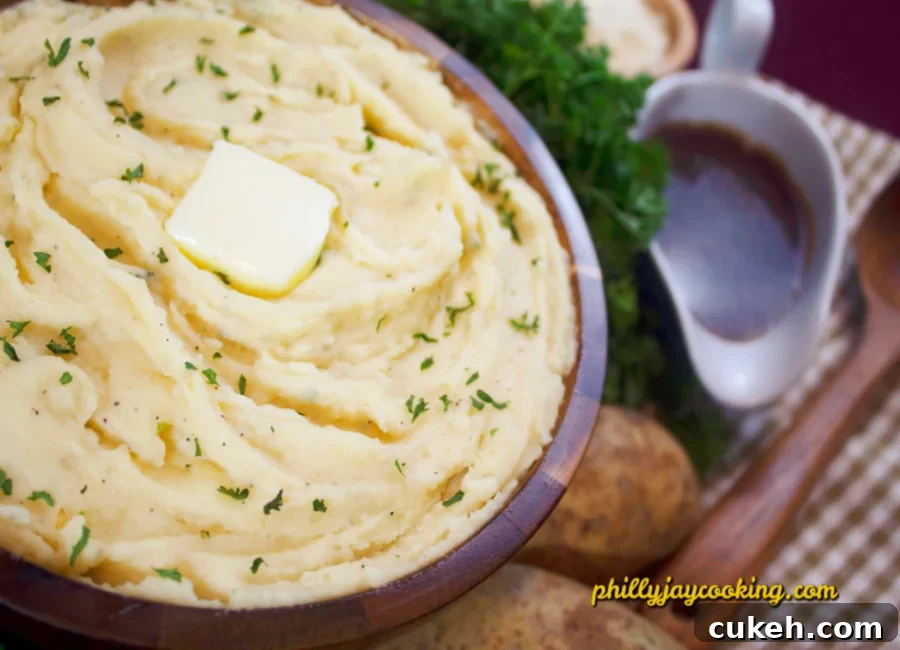
Let me start by saying I’m thrilled to share this mashed potatoes recipe. If you’ve ever struggled to make smooth, creamy mashed potatoes, this method will help. After trying many approaches, I discovered a straightforward technique that produces lump-free, velvety mashed potatoes every time. I also add a few extra ingredients — like cream cheese and Parmesan — that elevate the flavor without masking the potato’s natural taste.
Growing up I didn’t like mashed potatoes; they seemed bland and unexciting. Over time I learned that their neutral flavor is a strength: it makes them a versatile side that pairs well with many mains. When prepared correctly — well seasoned, buttery, and smooth — mashed potatoes become a highlight of the meal. After months of experimenting, I found the right balance of ingredients and technique to make mashed potatoes that I now crave.
I hated mashed potatoes as a kid
I used to see mashed potatoes as a big scoop of white mush. What changed my mind was tasting truly great mashed potatoes: buttery, well seasoned, and silky. Once you get the technique right — and add a little richness — mashed potatoes transform from ordinary to exceptional. In my recipe I use plenty of butter, and I often include shredded Parmesan and Philadelphia cream cheese for extra creaminess and depth. You can always reduce the butter if you prefer.
Choosing The Right Potatoes
High-starch potatoes
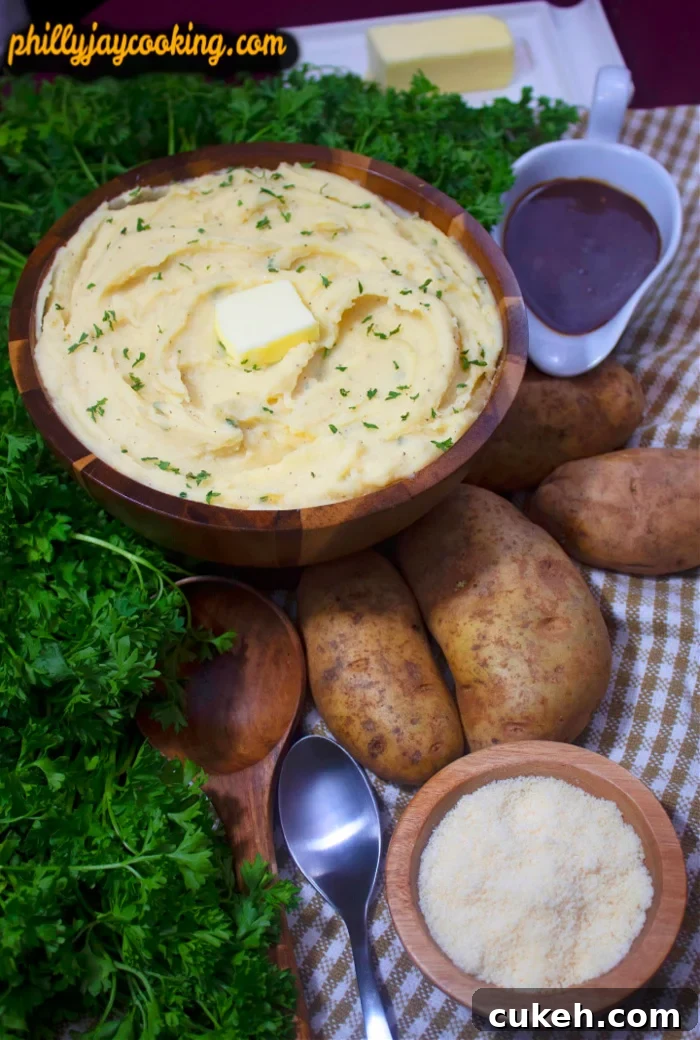
Choosing the right potato is essential. High-starch varieties like russet (Idaho) produce the light, fluffy texture that’s ideal for mashing. Yukon Golds are also an excellent option: they have medium starch and a naturally buttery flavor that makes them great for creamy mashed potatoes. High-starch potatoes allow you to whip the potatoes longer without becoming gummy, resulting in a smoother texture.
Waxy Low-starch potatoes are a no-no!
Avoid waxy potatoes — such as red potatoes, fingerlings, new potatoes, and baby creamers — for mashed potatoes. Their firm flesh holds shape during cooking, leading to a dense or lumpy mash. Those varieties are better suited for stews or potato salads where you want the pieces to stay intact.
Ingredients you’ll need:
- Potatoes: Russet or Yukon Gold (2 lbs)
- Chicken broth: Use a mix of water and broth to boil the potatoes for added flavor
- Heavy cream: For richness and a velvety texture (half-and-half or whole milk can be used)
- Butter: Key for flavor and richness
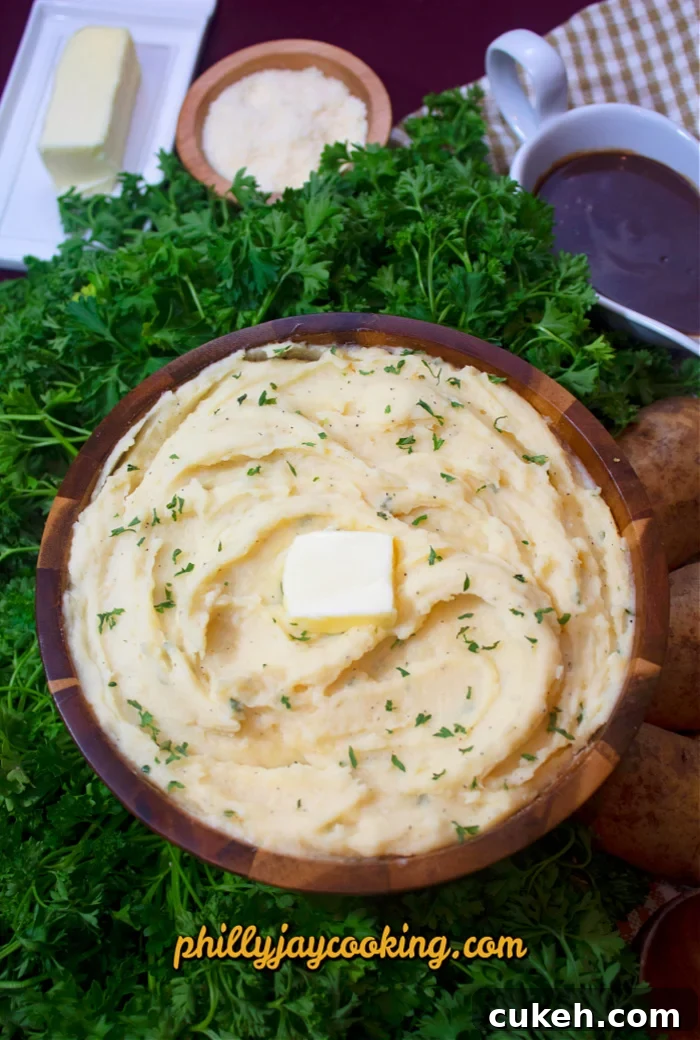
- Cream cheese & Parmesan: Philadelphia cream cheese and grated Parmesan add silky texture and savory depth (optional but recommended)
- Garlic paste: Garlic pairs beautifully with mashed potatoes; use a paste or minced garlic
- Salt & pepper: Salt to season and black or white pepper to taste
How to make mashed potatoes
- Fill a large mixing bowl with cool water and add 1/8 teaspoon salt.
- Peel the potatoes, removing any sprouts or dark spots.
- Dice the potatoes into medium-sized, evenly sized cubes so they cook uniformly.
- Place the cut potatoes into the bowl of cool salted water immediately to prevent browning.
- Drain and rinse the potatoes after cutting.
- Transfer the potatoes to a medium pot and cover with a combination of chicken broth and cool water.
- Bring the pot to a boil over high heat, cover with a lid leaving a small crack to prevent overflow.
- Boil for about 40 minutes or until the potatoes are very tender when pierced.
- Once tender, strain the liquid and clean the pot.
- Return the pot to medium heat and add the butter, cream, cheese, garlic, and seasonings. Stir to warm and melt the cheese.
- If the cheese is used, whisk lightly until it melts, then add the drained potatoes. If you skip the cheese, add the potatoes once the butter has melted. Ensure the potatoes are well drained and dry before returning them to the pot.
- Stir, mash, and whisk the potatoes for about five minutes until thick and smooth. If you have a ricer, use it for extra-smooth results before finishing with a gentle mash or whisk.
Tips For Best Results:
- Cut evenly: Uniform pieces cook at the same rate, preventing undercooked bits.
- Start in cold water: Add potatoes to cold water so they heat evenly as the water warms.
- Cook until very tender: Tender potatoes require less aggressive mashing, which helps avoid overworking the starch and producing a gummy texture.
- Cover the pot: A lid speeds cooking; leave a small crack so the water doesn’t boil over.
- Use a ricer: A potato ricer ensures lump-free potatoes and makes achieving a silky texture easy.
- Room temperature dairy: Let butter, cream cheese, and cream come to room temperature so they blend smoothly into the potatoes.
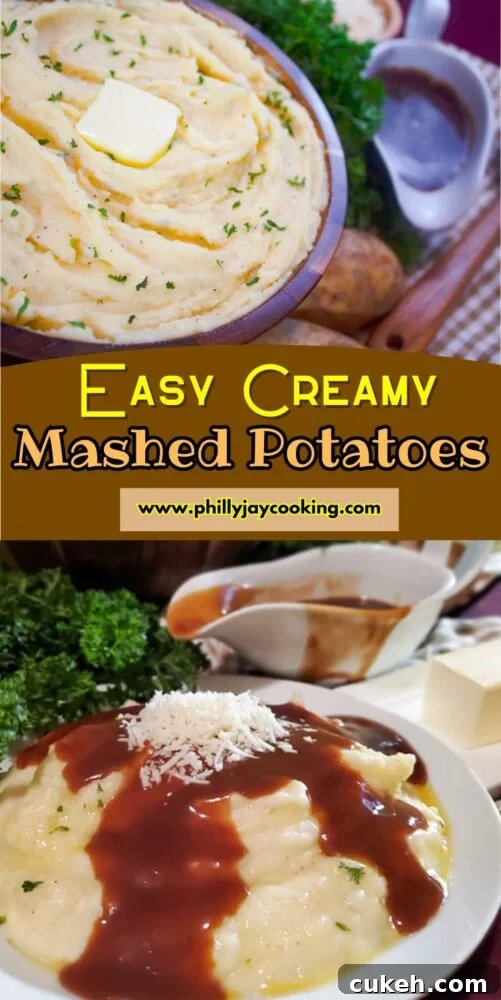
Main dish Serving suggestions:
- Steak: Seared or smothered steak pairs classically with mashed potatoes.
- Salisbury steak or meatloaf: Both are comforting, savory matches for creamy mash.
- Fried chicken: Crispy fried chicken and mashed potatoes make a popular, satisfying combination.
Vegetable Sides & Toppings Suggestions
- Asparagus or spinach: Simple green vegetables balance the richness of the potatoes.
- Sweet corn: Sweet buttery corn adds a pleasant contrast to a savory plate.
- Gravy: A classic topping — gravy enhances both flavor and moisture.
- Extra cheese: Sprinkle or mix in more cheese for an even richer result.
Storage and Reheating
- Refrigerate: Store mashed potatoes in a tightly sealed container for up to several days.
- Freeze: Mashed potatoes freeze well when sealed to prevent freezer burn; they can last 3–4 months or longer.
- Reheat: Reheat in a pot over low to medium heat, stirring and adding a splash of milk or broth to restore creaminess. Microwaving works too for smaller portions.
Frequently Asked Questions
- Why are there hard lumps in my potatoes? Either the potatoes weren’t cooked long enough, you used a poor mashing tool, or you used waxy potatoes instead of starchy varieties.
- Why do my potatoes become gummy? Overworking the potatoes releases too much starch. Mash gently and avoid excessive mixing, and consider using a ricer for a smooth texture without overworking.
Equipment
- Potato peeler: Faster and safer than using a knife, and preserves more potato flesh.
- Knife: A large knife helps with slicing and dicing and removing blemishes.
- Medium pot: Big enough to boil and finish the potatoes.
- Potato ricer or masher: A ricer guarantees lump-free results; a masher works if you’re careful not to overwork the potatoes.
- Cheese grater: If you use block Parmesan, grate it fresh for best flavor.
- Big spoon: For stirring and serving.
If you’ve struggled with mashed potatoes before, this recipe should make the process easier and more reliable. With the right potato, careful cooking, and a few flavorful additions, you can make mashed potatoes that are smooth, creamy, and delicious. Try them with your favorite main dishes, and adjust butter and cheese to suit your taste. Enjoy!