When I glanced at my son’s first-grade report card, I noticed he was excelling in math but struggling with reading. This pattern isn’t unusual: many studies report that boys often lag behind girls in reading and writing.
Boys tend to learn to read at an older age than girls, take longer to learn, and comprehend narrative texts less easily. Boys also value reading less, and see reading as a way to get information rather than as a recreational activity (Simpson, 1996; Smith & Wilhelm, 2002)
Fourth-grade girls significantly outperformed boys on the combined reading literacy scale in all Group of Eight (G8) countries participating in the Progress in International Reading Study in 2001. In the United States, boys scored an average of 18 points lower than girls. (Freeman, 2004)
So how can we help boys not only read well but also enjoy reading?
Practice, practice, practice
Boys are more likely to engage with activities they feel competent at. The more confident your son becomes with reading, the more he’ll choose to read for pleasure. Make practice part of everyday life so it feels natural rather than like formal learning. At the grocery store, have him read items from the list. Encourage older siblings to read to younger ones. And include a bedtime story every night—one he can help read aloud.
Make it fun
Turn reading into games: hangman, BINGO, timed crossword races, or a twist on I Spy—“I spy something that starts with A.” Many boys enjoy competition, so playful challenges around words can spark excitement and build skills.
Match reading to his interests
Choose books and materials that reflect what he loves. My six-year-old is obsessed with LEGO, so LEGO-themed books and magazines motivate him to read independently. We also race to find items in picture books and I Spy collections—my older child reads the accompanying text while the younger one searches the pages.
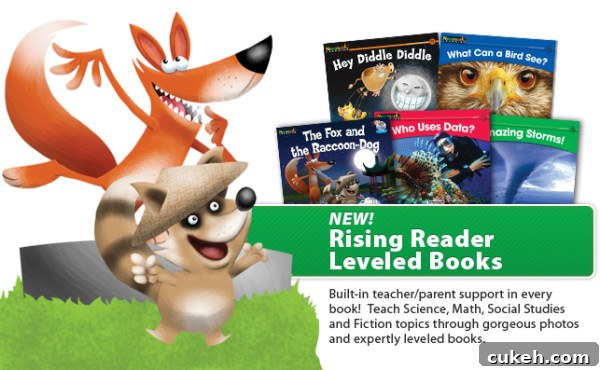
Don’t rely solely on schools for reading and writing development. Classrooms are busy places, and extra practice at home makes a big difference. Keep a selection of leveled readers and other educational resources available. Both my six-year-old and my four-year-old bring leveled books home from school, and having an at-home collection lets us continue practicing during school breaks so skills don’t slide.
Newmark Learning provides a wide range of educational materials for teachers, parents, and homeschoolers—covering pre-K through middle school across many subjects. Their resources can help families keep children engaged and progressing with reading and literacy practice.
Enter below for a chance to win a $450 prize from Newmark Learning!
($150 in product of the winner’s choice plus a one-year subscription to Newmark Interactive)
US/CAN