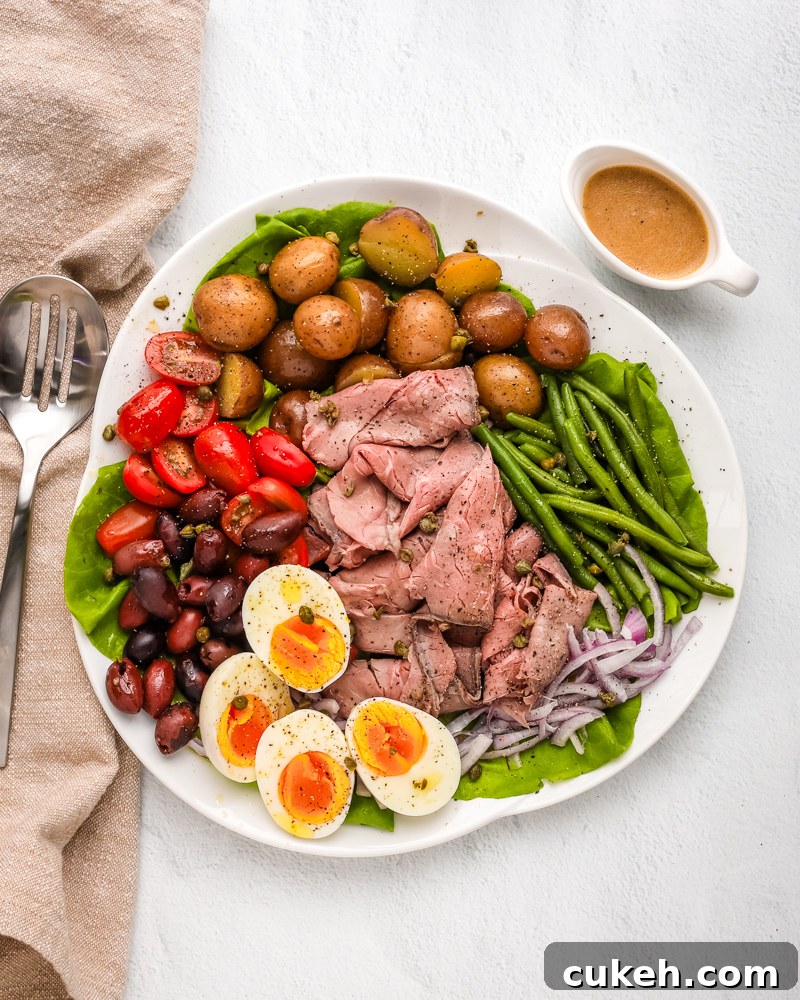
This roast beef Niçoise salad is a fresh, accessible take on the classic tuna version. Built from simple ingredients and requiring only minimal cooking, it’s versatile, satisfying, and packed with flavor.
A Niçoise salad traditionally showcases a colorful arrangement of vegetables, eggs, and tuna. In this version, thinly sliced deli roast beef replaces the tuna, lending a savory, meaty note that pairs beautifully with crisp greens and bright dressing. Tender baby potatoes, crisp haricots verts (or regular green beans), halved cherry tomatoes, briny Kalamata olives, and hard‑boiled eggs come together in a composed platter. A red wine vinaigrette with Dijon mustard and minced shallot brings acidity and depth, finishing the salad with a classic, zesty French touch.
What You’ll Like About This Recipe
- A fresh spin on a classic. Swapping roast beef for tuna makes the salad heartier while keeping the Niçoise character intact.
- Balanced textures and flavors. Creamy potatoes, crisp beans, soft eggs, juicy tomatoes and salty olives create pleasing contrasts in every bite.
- Minimal active cooking. Aside from boiling potatoes and briefly steaming beans, most assembly is no-cook, making it ideal for warm days or quick meals.
- Protein-rich main dish. Roast beef and eggs provide enough protein to serve the salad as a satisfying entrée.
- Easy to adapt. Swap proteins or vegetables to suit dietary needs without losing the essence of a Niçoise.
Ingredient Notes
- Mixed salad greens – Use butter lettuce, spring mix, or crisp romaine as a sturdy base to support the toppings.
- Roast beef – Thin deli slices are convenient and tender; high-quality or leftover homemade roast beef both work well.
- Baby potatoes – Boil until just tender, chill, and slice so they hold their shape. Yukon Golds give a creamy, buttery texture.
- Haricots verts – These slender French green beans keep a nice snap when steamed briefly. Regular green beans are a fine substitute.
- Kalamata olives – Their briny, savory flavor complements the other ingredients; traditional Niçoise olives work if available.
- Hard‑boiled eggs – Cook to your preferred doneness; jammy yolks are a delicious option.
- Shallots – Mild and aromatic, they enhance the dressing without overpowering the salad.
- Red wine vinegar – Provides bright acidity for a classic French vinaigrette.
- Dijon mustard – Helps emulsify the dressing and adds a subtle kick.
Steps to Make Roast Beef Niçoise Salad
- Boil the baby potatoes until just tender. Chill completely before slicing so they hold together in the salad.
- Steam the haricots verts or green beans until crisp‑tender, then plunge into ice water to preserve color and texture.
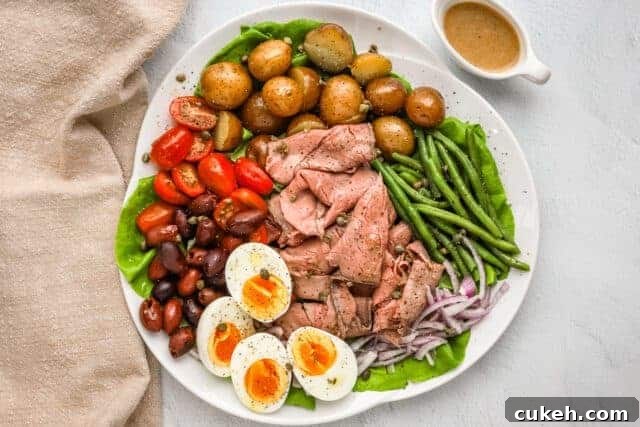
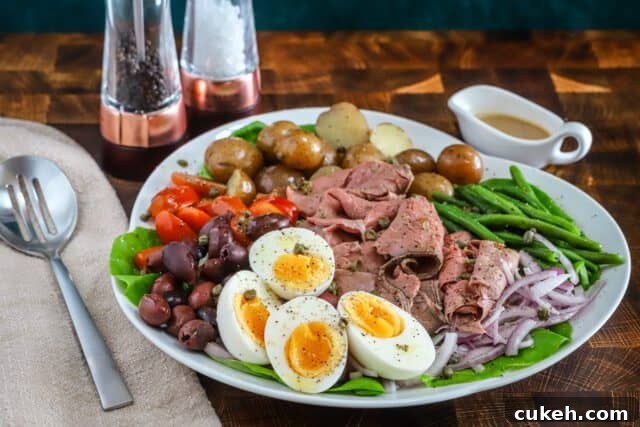
- On a large platter or individual plates, arrange the mixed greens. Neatly group the roast beef, potato slices, beans, cherry tomatoes, olives, egg halves, and red onion for a composed presentation.
- Whisk or shake the dressing: combine minced shallots, olive oil, red wine vinegar, Dijon mustard, grated garlic, and a touch of sugar or honey until emulsified.
- Taste the dressing and season with sea salt and freshly ground black pepper, adjusting acidity or sweetness as needed.
- Either serve the dressing on the side or drizzle it lightly just before serving to keep the greens crisp.
Pro Tips
- Shock the beans in ice water after cooking to lock in color and stop the cooking.
- Cool then slice the potatoes so they remain firm and slice cleanly.
- Choose thinly sliced roast beef for tender, easy-to-eat bites.
- Dress lightly at the table to prevent wilting; allow guests to add more if desired.
- Prep components ahead and assemble just before serving for the freshest appearance.
Recipe Variations
- Traditional Niçoise: Replace the roast beef with canned or seared tuna to return to the classic version.
- Chicken Niçoise: Use sliced grilled chicken breast for a lighter protein option.
- Vegetarian version: Substitute chickpeas or marinated tofu for a plant-based, protein-rich salad.
- Warm Niçoise: Serve the potatoes and beans warm for a comforting fall variation.
- Herb-forward: Stir in chopped fresh parsley, basil, or tarragon to brighten both salad and dressing.
Serving Suggestions
- Present chilled on a large platter for an elegant, shareable meal.
- Serve with crusty French bread or a baguette to round out the plate.
- Pair with a glass of rosé, a light red wine, or sparkling water with lemon.
How to Store
- Refrigerate: Keep components separately for up to three days. Greens will wilt if dressed, so store dressing separately.
- Freeze: Not recommended; raw greens and boiled potatoes don’t freeze well.
- Reheat: Warm only the potatoes or green beans gently if desired; serve the rest cold.
Roast Beef Niçoise Salad
Diana Rattray
Pin It
Start Cooking
Save RecipeSaved
Ingredients
- 4 cups mixed salad greens or lettuce
- 8 ounces thinly sliced deli roast beef
- 1 pound baby potatoes, boiled, chilled
- 1 cup haricot verts, steamed just until crisp-tender
- 1 cup halved cherry tomatoes
- ½ cup pitted Kalamata olives
- 2 hard-boiled eggs, halved or quartered
- ¼ to ½ cup thinly sliced red onion
- Sea salt and freshly ground black pepper to taste
For the Dressing
- 2 tbsp minced shallots
- ¼ cup extra virgin olive oil
- 2 tbsp red wine vinegar
- 1 tbsp Dijon mustard
- ½ tsp grated garlic
- Dash sugar or honey
- Fine sea salt and freshly ground black pepper to taste
Instructions
-
Arrange the salad ingredients. Spread mixed greens on a large platter or on individual plates. Neatly arrange roast beef, sliced potatoes, haricots verts, halved cherry tomatoes, Kalamata olives, hard‑boiled egg halves or quarters, and thin slices of red onion. Finish with a light sprinkle of sea salt and freshly ground black pepper.

-
Dress the salad. In a jar or bowl combine minced shallots, extra virgin olive oil, red wine vinegar, Dijon mustard, grated garlic, and a small dash of sugar or honey. Whisk or shake until well emulsified. Taste and season with salt and pepper, then serve the dressing on the side or drizzle lightly over the salad just before serving. Enjoy.
Nutrition
Disclaimer:
Nutritional information is estimated using a third‑party tool and should be considered an approximation. Values vary with measurements, brands, and serving sizes.